
Running hot under the covers has a way of wrecking an otherwise good night’s sleep. The right comforter pulls heat and moisture away from your body instead of trapping it, so you stop flipping the pillow to the cold side. Material matters more than thread count here, and the picks below cover cotton, bamboo-derived viscose, and synthetic cooling fibers so you can match the fill and shell to your climate and sleep style.
The Choices Worth Comparing

Ubauba Goose Down Duvet Insert Queen, Cool Touch, 100% Cotton Shell, 90×90 Inch

Cozy Bliss Cooling Comforter Seersucker Plaid Queen Size, Q-Max 0.45, Denim Blue

Cozy Bliss Cooling Comforter Seersucker Plaid Queen Size, Q-Max 0.45, Sage Green

DOWNCOOL Cooling Comforter Queen Size, Dual-Side Cooling, 90×90″

Cooling Comforter Queen Size, Double-Sided Cold Tech Fabric, Dark Gray

NEXHOME PRO 100% Viscose from Bamboo Comforter Queen Size, Sage Green
Bamboo Bay All Season Queen Size Comforter, 100% Viscose from Bamboo, 90×94″
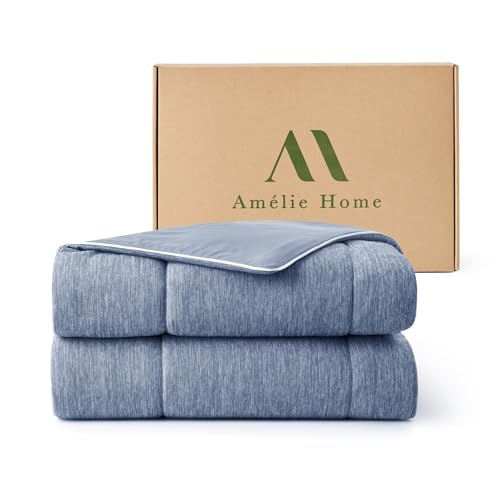
Amélie Home Cooling Comforter Blanket Queen Size, Heather Denim Blue
Amélie Home Cooling Comforter Blanket Queen Size, Heather Mint Green
What Each Pick Brings To The Table
The Ubauba duvet leans on a 100% cotton shell and goose down fiber fill to manage temperature the old-fashioned way, by letting air move through the baffles. At 90 by 90 inches, it covers a queen mattress with enough drop to tuck, and the all-season weight sits in that middle zone where you can use it in summer and winter without swapping covers. The fill passes OEKO-TEX certification, which means the down has been screened for common textile chemicals.
For someone moving from a heavy synthetic comforter to something more breathable, this is a gentle transition. Down is naturally lofty, so the duvet feels light on the body even when it provides real warmth. If you share a bed with a partner who runs cold, the medium fill covers both sleepers without one of you stripping the bed at 3 a.m.
What Helps Most
- 100% cotton shell lets air pass instead of sealing heat against your skin
- Lightweight goose down fill keeps loft without weight, helpful for restless sleepers
- OEKO-TEX certified fill offers some peace of mind on chemical screening
- All-season weight works for most climates without a winter swap
- Square 90 by 90 inch dimensions drape a queen mattress with a generous drop
Worth Noting
- Down fill may feel too warm for sleepers in humid climates without air conditioning
- Shell typically needs a duvet cover to stay clean, adding an extra laundering step
Right Fit For
Hot sleepers in temperate climates who want the airy feel of natural down without committing to a winter-weight duvet.
A Better Fit Elsewhere
Severe night sweat sufferers get a more direct cooling effect from the Cozy Bliss Seersucker Plaid comforter, which uses a dedicated cold-side fabric.
Cozy Bliss takes a different angle on cooling by engineering one face with a Q-Max rating above 0.45. Q-Max is a lab test that measures how much heat a fabric pulls away from your skin on contact, so a higher number means a cooler first touch. The opposite side swaps to a textured seersucker, a puckered weave that holds tiny air gaps and keeps the fabric from sitting flat against your body. That two-sided design lets you flip the comforter based on the night.
The denim blue colorway reads casual rather than hotel-formal, which suits a layered, lived-in bedroom. If your main complaint is waking up damp rather than just warm, the moisture-wicking face does more work than a plain cotton shell would. You may find the cooling sensation strongest in the first few minutes before the fabric equalizes with your body temperature.
Reasons It Performs
- Q-Max 0.45 rating delivers a measurable cool-to-the-touch feel on one side
- Seersucker reverse side adds airflow through the textured weave
- Reversible design extends use across seasons without a second blanket
- Lightweight build reduces the smothered feeling common with heavier comforters
Points To Keep In Mind
- Cooling effect can fade once the fabric warms to body temperature, so flipping helps
- Synthetic cooling fibers may feel slick to anyone expecting the softness of cotton
Feature Snapshot
Who Will Love This
Hot sleepers who want a noticeable cool-touch moment the moment they slide into bed, especially in air-conditioned rooms.
Skip It When
Shoppers who prefer the natural hand-feel of cotton or bamboo should look at the NEXHOME PRO viscose comforter instead.
This is the same Cozy Bliss comforter as the denim blue version above, just in a sage green colorway that softens the look of a layered bed. Performance is identical: the Q-Max 0.45 face on one side, the seersucker plaid on the other, and a lightweight fill that does not trap heat the way a dense polyester comforter can. The sage tone also hides the minor wrinkling that seersucker is famous for, so the bed looks intentional rather than rumpled.
For guest rooms or anyone redecorating around muted earth tones, this color earns its place over louder options. The cooling technology is the same as the denim model, so the choice here is really about aesthetic. You may find sage green coordinates more easily with linen sheets and natural fiber throws than the bolder denim.
What It Does Well
- Muted sage green pairs with most bedroom palettes without clashing
- Two-sided construction gives you a cool face and a textured face in one comforter
- Q-Max 0.45 cooling fabric handles the first-contact heat that wakes hot sleepers
Trade Offs
- Same synthetic hand-feel as the denim version, which some sleepers find slick
- Cooling effect levels off as the fabric warms, so flipping mid-sleep helps on bad nights
- Seersucker texture can snag on rings or rough nails during regular handling
Best Suited To
Hot sleepers decorating a calm, neutral bedroom who want the same cooling performance as the denim Cozy Bliss in a softer palette.
Look Elsewhere When
Anyone after a fully natural fiber should consider the Bamboo Bay viscose comforter, which uses bamboo-derived material throughout.
DOWNCOOL puts the same Q-Max 0.4+ cooling treatment on both faces, which means you cannot flip it wrong at 2 a.m. That dual-side approach also spreads wear more evenly, so neither face ends up the “good side” after a season of sleeping. At 90 by 90 inches, the comforter covers a queen mattress with enough overhanging fabric to tuck along the sides. The blue colorway reads cooler than neutral options in a dim bedroom.
The lower price point makes this a low-risk way to try a cooling comforter before investing in premium bamboo or high-end synthetics. If you have never slept under a Q-Max fabric, this is a sensible starting point. You may find the cool-touch sensation less intense than the Cozy Bliss at 0.45, but the difference is small for most sleepers.
What Works In Its Favor
- Dual-side cooling removes guesswork about which side is up
- Lightweight construction suits summer-heavy use without overheating
- Queen dimensions drape a standard mattress with adequate overhang
- Lower price tier compared to bamboo and premium cooling options
Honest Caveats
- Synthetic cooling fibers may feel less breathable than bamboo-derived viscose over long nights
- Brand recognition is lower than household names, so warranty support may take more effort
Quick Facts
Made For
First-time cooling comforter shoppers who want to test the concept without paying for a premium bamboo build.
Swap It Out When
Long-term shoppers who want a more natural fiber hand-feel should step up to the NEXHOME PRO bamboo viscose comforter.
The bedsmile comforter relies on the same Q-Max above 0.45 cooling fabric as the Cozy Bliss picks, but goes one step further by quilting the cold tech material on both sides. Quilted construction means the fill stays evenly distributed even after repeated washing, so you do not end up with cold patches and warm spots. The dark gray color masks the inevitable light staining that white comforters show after a year of use.
If your sleep issues go beyond occasional warmth and into the territory of waking up drenched, the dual cold tech faces keep working all night rather than just at first contact. The dark color also makes this a sensible pick for a guest room where you cannot control the cleaning schedule. You may find the cool-touch feel lasts longer than on single-side options because both faces actively draw heat away.
The Case For It
- Double-sided cold tech fabric maintains cooling on both faces throughout the night
- Quilted construction keeps fill from clumping, so cool zones stay consistent
- Dark gray color hides everyday wear and minor discoloration
Some Limits To Know
- Synthetic shell may feel less inviting than natural bamboo for tactile-focused sleepers
- Cooling performance can wane slightly as ambient room temperature rises above 78°F
Feature Rundown
Who Should Grab It
Hot sleepers with persistent night sweats who need continuous cooling on either side of the bed.
Consider Something Else When
Anyone sensitive to synthetic textures should pivot to the Bamboo Bay viscose comforter for a softer natural hand.
Viscose from bamboo is a regenerated cellulose fiber that breathes naturally and feels smoother than cotton against bare skin. NEXHOME PRO builds the entire shell and cover from this material, so the cooling benefit comes from the fiber itself rather than a chemical treatment that can wash out over time. The sage green colorway sits in the same earthy palette as the Cozy Bliss sage option, which makes them easy to compare on style alone.
For sleepers with sensitive skin or anyone who dislikes the slick feel of synthetic cooling fabrics, bamboo viscose is a friendlier alternative. The fabric also wicks moisture better than plain cotton, so humidity does not pool against your body. You may find the cool feeling less dramatic than a Q-Max fabric, but it lasts all night instead of fading after the first hour.
Notable Gains
- 100% viscose from bamboo delivers natural moisture-wicking without chemical coatings
- Silky hand-feel suits sleepers who dislike the texture of synthetic cooling fabrics
- All-season weight handles mild winters and warm summers without swapping
- Sage green color coordinates with most bedroom palettes
A Few Limitations
- Natural bamboo fibers do not deliver the same instant cool-touch as Q-Max synthetics
- Viscose typically needs gentler wash cycles than polyester to maintain softness
Built With In Mind
Hot sleepers with sensitive skin or anyone who values natural fibers over engineered cooling treatments.
Where Another Pick Suits Better
Sleepers who want a stronger immediate cool sensation should try the Amélie Home cooling blanket, which uses a dedicated Q-Max fabric.
Bamboo Bay takes the viscose-from-bamboo route and pairs it with a hollow-fiber fill that mimics the loft of down without the allergens. Hollow fibers trap small pockets of air, so the comforter feels light but still insulates on cooler nights. The 90 by 94 inch dimensions are slightly larger than the standard 90 by 90, giving a longer drop at the foot of a queen bed, which is helpful for taller sleepers who find short comforters riding up overnight.
Corner tabs let you clip the comforter inside a duvet cover, so it stays put while you sleep. That is a small detail that matters more than it sounds if you tend to toss and turn. The shell uses a long-staple bamboo weave, which holds up to washing better than short-staple versions. You may find the fill slightly less lofty than the Ubauba down option, but the trade-off is a fully hypoallergenic build.
The Good Stuff
- Long-staple bamboo viscose shell resists pilling and stays soft through washes
- Hollow-fiber down alternative fill is fully hypoallergenic
- Corner tabs anchor the comforter inside a duvet cover securely
- Generous 90 by 94 inch dimensions suit taller sleepers
- All-season weight works across spring, summer, and fall
Practical Considerations
- Hollow-fiber fill may not loft back up as quickly as natural down after compression
- Larger dimensions mean it can crowd a standard queen duvet cover at the head end
Whose Shelf It Belongs On
Hot sleepers with allergies who want a natural bamboo shell and a hypoallergenic fill in a slightly oversized queen cut.
Reach For A Different Pick When
Shoppers who want the lightest possible fill should look at the Ubauba goose down duvet, which has a thinner profile.
Amélie Home combines a Q-Max 0.45+ cooling fabric on the outside with a Sorona fill on the inside. Sorona is a plant-based polymer derived partly from corn sugar, so the fill has a more sustainable story than standard polyester. The heather denim blue color has a soft, lived-in look that works in casual bedrooms without clashing with patterned sheets.
For sleepers who want the cool-to-the-touch sensation of a Q-Max fabric but prefer a more natural-origin fill, this is a smart middle ground. Sorona also has a slight springiness that helps the comforter keep its shape after washing. You may find the cool sensation very similar to the Cozy Bliss picks, since the shell is in the same Q-Max bracket, but the inside is the real differentiator here.
Real-World Strengths
- Q-Max 0.45+ shell delivers a strong cool-touch feel on contact
- Plant-based Sorona fill offers a more sustainable alternative to polyester
- Heather denim blue reads casual and pairs with patterned sheets easily
Trade-Offs To Consider
- Plant-based fill may cost more than a comparable polyester option
- Cooling effect still levels off once the fabric equalizes with body temperature
Feature Card
The Right Fit
Eco-conscious hot sleepers who want a high Q-Max shell with a more sustainable fill rather than standard polyester.
Where A Sibling Pick Shines
Shoppers who want a fully bamboo build should consider the NEXHOME PRO viscose comforter, which uses natural fibers throughout.
This is the same Amélie Home comforter as the heather denim blue version above, just in a soft mint green that brightens a room without shouting. The performance profile is identical: Q-Max 0.45+ cooling shell, plant-based Sorona fill, and a heathered weave that softens the visual weight of the bedding. If you like the cool-touch feel of the denim model but want a fresher color for a guest room or a spring bedroom refresh, the mint option covers that.
Mint green also photographs well for anyone staging a bedroom for sale or rental listings. The light color shows dust and pet hair more readily than the denim version, so it may need more frequent laundering in a busy household. You may find the cooling effect identical to the denim since the fabric is the same; the choice really comes down to the room you are dressing.
A Favorable Mix
- Same Q-Max 0.45+ cool-touch shell as the denim sibling for consistent performance
- Mint green color brightens neutral rooms and reads fresh in photos
- Plant-based Sorona fill keeps the sustainability story consistent with the brand
Less-Strong Areas
- Lighter color shows lint and pet hair more than the heather denim option
- Performance is identical to the denim, so choosing is purely aesthetic
Perfect Match For
Hot sleepers who want the same Q-Max cooling shell as the denim Amélie Home in a softer, fresher color for a guest room or primary bedroom refresh.
Not Your Match When
Households with shedding pets may prefer the heather denim blue, which hides fur more effectively than mint green.
What To Weigh Before Picking Comforter Materials For Hot Sleepers
Fiber Source And Feel
Natural fibers like cotton and bamboo-derived viscose breathe and wick moisture through the fiber structure itself, so cooling does not wash out over time. Synthetic Q-Max fabrics deliver a stronger initial cool touch but the engineered treatment can feel slick against the skin. For most hot sleepers, the honest read is that natural fibers win for all-night comfort, while synthetics win for the first-contact chill.
Fill Weight And Loft
Down and down-alternative fills trap warm air, so even an all-season duvet can run hot in humid climates without air conditioning. Lighter fills with lower fill power keep the comforter drapey rather than puffy, which reduces the trapped-air layer between you and the blanket. A queen sleeper in a 75°F bedroom usually wants something in the lightweight to all-season range, not a winter weight.
Cooling Technology Vs. Breathability
Q-Max ratings measure instantaneous heat transfer, which feels great for the first 20 minutes but does not guarantee comfort all night. Breathable natural fibers do not give that initial chill but regulate temperature more evenly over eight hours. The trade-off shows up clearly in side-by-side use: Q-Max comforters feel like a cold splash, bamboo comforters feel like a steady breeze.
Care And Longevity
Cotton and bamboo comforters typically need gentle wash cycles and low heat to maintain softness, while synthetic Q-Max fabrics tolerate more aggressive machine washing. Down and down-alternative fills need regular fluffing to keep loft, and corner tabs help keep the fill from shifting inside a duvet cover. Realistically, anyone washing weekly should plan on a three to five year lifespan for most options on this list.
Key Considerations Across These Picks
Pitfalls Shoppers Hit
A common slip is choosing a Q-Max comforter expecting it to stay cold all night, when in reality the cool-touch effect fades as the fabric equalizes with body temperature. Another trap is buying a winter-weight down comforter for summer use because the cotton shell sounds breathable, only to find the fill still traps too much heat. Read the fill weight, not just the shell material, before committing.
Where The Extra Money Goes
Stepping up to bamboo-derived viscose or plant-based Sorona fill typically means better moisture management and a more natural hand-feel, not just stronger marketing. Premium picks also tend to use longer-staple fibers that resist pilling and hold up to more wash cycles. Paying more makes sense for daily use in a primary bedroom, while budget cooling fabrics work well for guest rooms and seasonal swaps.
Frequently Asked Questions
What Comforter Material Is Coolest For Hot Sleepers?
Bamboo-derived viscose and cotton both breathe well and wick moisture, so they tend to feel cooler across a full night. Q-Max synthetic fabrics feel coolest on first contact but warm up faster once your body heat equalizes.
Is A Cooling Comforter Worth It For Night Sweats?
Yes, especially options with Q-Max rated fabrics on both sides, which keep drawing heat away throughout the night. Pairing a cooling comforter with moisture-wicking sheets gives the best results for heavy night sweats.
Can A Cotton Comforter Keep You Cool?
A 100% cotton shell allows air to pass through, which prevents the sealed-in feeling of synthetic shells. Cotton does not feel as cold to the touch as Q-Max fabrics, but it regulates temperature more steadily across a full sleep cycle.
How Often Should You Wash A Cooling Comforter?
Every two to four weeks is a reasonable rhythm for most households, though duvet covers can stretch that to monthly or less. Always check the care label, since bamboo viscose and down-alternative fills often need gentler cycles than synthetic Q-Max shells.
Do Cooling Comforters Work Without Air Conditioning?
They help, but they cannot fully replace climate control in extreme heat. In a 78°F+ room, even a Q-Max fabric will eventually warm to body temperature, so a fan or AC still matters on the hottest nights.
Wrap Up
The right comforter for a hot sleeper is really about matching material to your sleep style. Q-Max synthetics deliver the strongest first touch, bamboo viscose offers the most consistent all-night comfort, and cotton down alternatives bridge the two at a friendlier price. Pick the one that fits how you actually sleep, and your nights will feel noticeably quieter.