

Most nights, the wrong angle between your head, back, and mattress leaves you groggy, sore, or staring at the ceiling at 2 a.m. Bed pillow wedges are the quiet fix, tilting your torso to ease acid reflux, lifting your legs to take pressure off a recovering back, or just stopping your pillow from sliding into that annoying headboard gap. After sorting through ten options across sleep, recovery, and couch use, the picks below match specific situations, not generic “comfort” claims. You’ll see who’s built for post-surgery recovery, who’s better for side sleepers, and which gap-filler actually stays put on a restless night.
The Lineup, Simplified
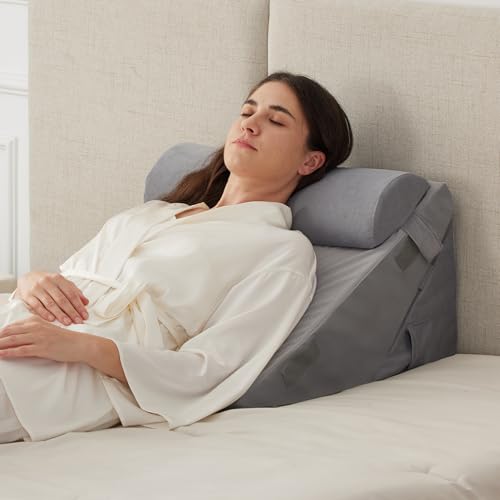
Ruqmuis 3PCS Adjustable Bed Wedge Pillow Set (Grey Plush)
Vekkia Lumbar Support Pillow for Recliner
Vekkia Wedge Pillow for Side Sleeping
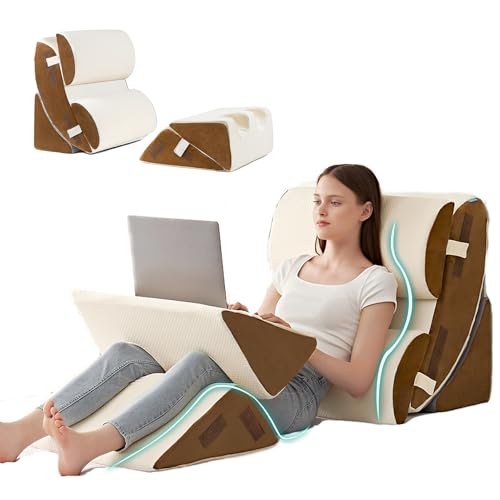
Hansleep Bed Wedge Pillow Set 6PCS (Beige, 23″)

Hansleep Bed Wedge Pillow Set 6PCS (Grey, 23″)

WGAKCED 3Pcs Wedge Pillow Set (Grey)

WGAKCED 3Pcs Wedge Pillow Set (Plush Grey)

XetraDesign Bed Wedge Pillow (Grey Queen 60″)
XetraDesign Bed Wedge Pillow (Grey King 76″)
COLDHUNTER 7.5″ Memory Foam Bed Wedge
More Details On Our Top Picks
The Ruqmuis set arrives as three stackable incline pieces, which means you can dial in 9 inches for a gentle upper-body lift or stack to 12 inches when reflux or post-surgery swelling calls for more elevation. In a real bedroom, that adjustability matters: the first week home from the hospital, you may need a steep torso angle, then taper down to something gentler as you heal.
Grey plush covers give the set a softer look than bare foam, so it blends with most bedding. The modular approach also means you can fold one piece under your knees for a quick leg lift without rearranging the whole stack.
Noteworthy Benefits
- Two height options in one set, useful for tapering elevation during recovery
- Plush grey cover feels softer against skin than standard foam finishes
- Modular pieces rearrange for leg or knee support without extra purchases
- Works as a reading backrest when propped against the headboard
Things To Consider
- Three stacked pieces take up more mattress real estate than a single wedge
- Plush cover may trap heat in warm bedrooms, depending on your sleep climate
Feature Snapshot
Whose Bed It Belongs On
Anyone recovering from upper-body or abdominal surgery who needs adjustable elevation week to week.
Swap It Out When
The Vekkia Lumbar Support Pillow for Recliner is a better call for someone whose real problem is mid-back fatigue during long couch sessions rather than nighttime incline.
The Vekkia lumbar pillow steps away from bed-based wedges entirely and lives on your recliner, sofa, or office chair. Engineered foam (a denser, shape-recovering formulation) gives the pillow a firm push against the lower back rather than the sink-in feel of regular polyfill.
That firmness is the point. On a too-soft couch, your lower spine collapses into a C-curve within twenty minutes; on a too-firm office chair, you get pressure points. The Vekkia bridges both, contouring to your lumbar curve while holding its shape over a long movie or a multi-hour work session.
What Stands Out
- Engineered foam resists sagging through long seated sessions
- Ergonomic contour fits the natural curve of the lumbar spine
- Works on recliners, deep sofas, and firm office chairs
Worth Noting
- Not a sleep wedge; using it in bed is awkward and offers no incline
- Firmness may feel intrusive to those used to soft, plush back cushions
- Takes up seat depth on shallower chairs, depending on your frame
Made For
People who spend two or more hours a day on a recliner or couch and want their lower back to stop complaining.
Consider Something Else When
The Ruqmuis 3PCS Adjustable Bed Wedge Pillow Set handles nighttime reflux much better, since the lumbar pillow is built for upright seated posture, not for lying down.
Most bed wedges are flat triangles designed for back sleepers, which leaves side sleepers sliding downhill at 3 a.m. The Vekkia Wedge Pillow for Side Sleeping uses a contoured arc instead, shaped to follow the curve of your torso when you’re on your side.
High-density foam inside (a foam that compresses under weight but springs back without bottoming out) keeps the arc from collapsing through the night. If you sleep on your side because back sleeping wrecks your lower back, this shape holds the spine in a more neutral position than a flat wedge ever could.
Well-Handled Touches
- Contoured arc matches the natural side-sleeping torso shape
- High-density foam holds support through the full night
- Curved design helps prevent the slide that flat wedges cause for side sleepers
- Compact footprint compared to multi-piece systems
Trade Offs
- Not ideal for back sleepers, who need flat incline instead
- Smaller surface area than the Hansleep sets, so less leg or knee support
Feature Snapshot
Best Suited To
Side sleepers whose lower back aches when they wake up, especially those who have tried flat wedges and found themselves sliding off.
Look Elsewhere When
Back sleepers dealing with reflux should reach for the COLDHUNTER 7.5″ Memory Foam Bed Wedge instead, which gives the full-torso incline that side sleepers rarely need.
The Hansleep 6-piece set is what happens when a brand tries to solve every angle of a recovery bed at once. You get a base wedge for torso incline, a head pillow, a lumbar cushion, plus separate leg and knee pieces, all sized to work together on a 23-inch-wide configuration.
The mix of memory foam (a foam that softens with body heat and molds to your shape) for the head and lumbar zones and high-density foam for the base and leg pieces is a thoughtful split. The soft pieces get the contouring comfort, the structural pieces get the load-bearing foam.
Points In Its Favor
- Six pieces cover torso, lumbar, head, leg, and knee support at once
- Memory foam head and lumbar pieces contour to the body
- High-density foam base holds weight without sagging
- Modular layout rearranges for reading, sleeping, or napping
Honest Caveats
- Six pieces means setup, takedown, and storage all take longer
- Memory foam head pillow can feel warm in summer bedrooms
- Beige cover shows stains more readily than the grey variant
Key Product Details
Perfect Match For
Anyone setting up a recovery bed for several weeks who wants one coordinated system rather than piecing together individual wedges.
Reach For A Different Pick When
The Hansleep 6PCS in Grey is a better match for shoppers who want the same six-piece layout in a darker, more stain-forgiving upholstery.
The grey Hansleep set mirrors the beige version piece for piece, same six components, same memory-foam-and-high-density split, same 23-inch footprint. What changes is the upholstery color and the practical personality that comes with it.
Grey cover fabric hides smudges, foundation marks, and the slow darkening that recovery pillows accumulate over months of use. For a long-term setup on a guest bed or a recovery room that will see daily wear, that single difference is worth considering.
Useful Strengths
- Same six-piece coverage as the beige variant, no functional compromise
- Grey cover forgives minor stains better than light fabrics
- Foam split between memory and high-density serves each body zone well
- Modular pieces stack into custom reading or sleeping positions
Some Limits To Know
- Grey color reads cooler, which may not match warm-toned bedrooms
- Six pieces still require a real commitment to setup and storage
Who Will Love This
People who want Hansleep’s full six-piece coverage but prefer a darker cover that ages more gracefully over a long recovery period.
Skip It When
Minimalist shoppers who only need a single incline should consider the COLDHUNTER 7.5″ Memory Foam Bed Wedge, which gives the same basic angle with one piece instead of six.
The WGAKCED 3-piece set is a more compact take on the modular wedge idea. You get one head pillow, one base wedge, and one extension piece, so the whole stack reaches a steeper angle when you need reflux relief but collapses to a gentler setup for normal nights.
Memory foam in the head zone gives that contouring feel, while the base wedge does the heavy lifting. For shoppers who want adjustability but don’t need the full six-piece commitment of the Hansleep sets, this three-piece middle ground makes sense.
Real-World Strengths
- Three pieces adjust incline from gentle to steep without buying extras
- Memory foam head pillow molds to neck and head position
- Grey cover hides everyday wear better than light options
- Smaller footprint than six-piece recovery systems
Points To Keep In Mind
- No dedicated leg or knee piece, so leg elevation requires improvising
- Three-piece stack may shift slightly during restless sleep
Feature Rundown
Right Fit For
Reflux sufferers who want to dial incline up or down as symptoms change, without dedicating half the bed to a six-piece system.
Where A Sibling Pick Shines
The WGAKCED 3Pcs in Plush Grey is worth a look if you want the same layout but prefer a softer cover texture against your skin.
The Plush Grey version of the WGAKCED set swaps the standard cover for a plusher fabric, which sounds like a small detail but changes how the pillow feels against bare arms and shoulders. For sleepers who run cool or simply dislike the slight texture of basic upholstery, that plushness registers immediately.
Functionally, this set behaves just like its non-plush sibling: three modular pieces, memory foam head pillow, same incline adjustability. The difference is sensory, focused on comfort during long nights propped at an angle.
Benefits That Matter
- Plush cover feels softer against skin during long inclined sleep sessions
- Three-piece adjustability still applies, gentle or steep
- Memory foam head pillow contours to neck shape
- Grey plush hides minor stains and pillow marks
Trade-Offs To Consider
- Plush fabric may trap more heat than a woven cover in warm rooms
- Same three-piece limitation applies, no separate leg or knee support
Who Should Grab It
Sleepers who want the modular WGAKCED experience but care a lot about the hand-feel of the cover fabric against their skin.
A Better Fit Elsewhere
The Hansleep Bed Wedge Pillow Set 6PCS in Grey is a smarter grab if you also need dedicated leg and knee pieces, since the WGAKCED three-piece layout skips those zones.
The XetraDesign wedge is solving a different problem from every other pick on this list. If your mattress slides forward an inch or two during the night, you end up with a gap between the mattress and headboard where pillows, phones, and TV remotes vanish forever. This 60-inch wedge fills that gap for a queen bed.
The triangular shape wedges between mattress and headboard to close off the dead space, and a single rotation gives you different angle options. The honest read is that this is a niche problem solver, not a sleep-posture product, and it works best when paired with a separate incline wedge if you also want upper-body elevation.
Strengths Worth Knowing
- 60-inch length matches queen-size headboard spans
- Triangular profile blocks the headboard-to-mattress gap completely
- Rotating design offers multiple support angles in one piece
- Grey upholstery blends with most bedroom color schemes
Practical Considerations
- Designed for gaps up to 7 inches, larger gaps need a different solution
- Not a sleep incline, you’ll still need a separate wedge for reflux or snoring posture
- May need occasional repositioning after bed-making
Right Fit For
Queen bed owners who constantly lose small items to the gap behind their mattress and want a tidy, finished look against the headboard.
Not Your Match When
Shoppers who need actual sleep incline should grab the COLDHUNTER 7.5″ Memory Foam Bed Wedge, since the XetraDesign fills space, it doesn’t lift your torso.
Same wedge design, but stretched to 76 inches so it spans a king-size headboard without leaving the corners exposed. If you’ve ever tried to fill a king-size gap with a queen-size pillow and watched the ends flare out, the extra length here solves that frustration.
The construction matches the queen version, with a triangular gap-filling profile and a rotating angle feature. You get the same headboard-to-mattress closure, just sized for a larger bed.
Reasons It Performs
- 76-inch length spans full king headboards without gaps
- Triangular profile seals off the headboard-to-mattress space
- Rotating design offers multiple angle options per piece
- Same grey upholstery for consistent bedroom look
What To Weigh
- Larger footprint demands more storage space when not in use
- Still a gap filler, not a sleep incline wedge
Who It Suits Best
King bed owners who want a clean, gap-free line along the headboard and don’t want to combine two smaller fillers to cover the span.
Where Another Pick Suits Better
The XetraDesign Queen version is the right size for a queen bed, and a non-XetraDesign incline wedge is the right call for actual sleep elevation, since gap fillers and posture wedges are different products.
The COLDHUNTER is the anti-modular wedge: one piece, one incline, one job. The 7.5-inch height gives a moderate upper-body lift that suits reflux, post-nasal drip, or simply reading in bed without propping five pillows at awkward angles.
Memory foam inside the wedge softens with body heat and molds to your upper back, which feels more pleasant than resting on rigid foam. The simple form factor also means it’s easy to flip and use under the knees for leg elevation on a different night.
Where It Delivers
- Single-piece design sets up in seconds and stores easily
- 7.5-inch incline works for reflux, reading, and light snoring posture
- Memory foam softens against the upper back for a more natural feel
- Flippable design also works under the knees for leg elevation
Soft Spots
- No modular adjustment, the angle is what it is
- Memory foam may feel warm in hot bedrooms
Built With In Mind
Minimalist shoppers who want one reliable incline wedge without managing a stack of separate pieces or learning a modular system.
Swap It Out When
The Ruqmuis 3PCS Adjustable Bed Wedge Pillow Set is the better choice for post-surgery recovery, where tapering elevation matters more than a single fixed angle.
What To Weigh Before Picking A Bed Pillow Wedge
The right wedge depends less on brand and more on what you’re trying to fix. Start with the angle of your problem: reflux and snoring call for upper-body elevation, recovery calls for adjustable parts, lumbar fatigue on a couch calls for engineered foam, and a headboard gap calls for a filler, not a wedge.
Foam type is the next decision. Memory foam softens with body heat and contours to your shape, which feels nicer against the back of your head during long inclined sleep. High-density foam stays firmer and handles load-bearing zones like the base wedge and leg pieces. Many recovery sets use both, with memory foam for the head and lumbar areas and high-density foam for the structural pieces.
Sizing matters more than people expect. A wedge that’s too narrow for your torso will leave your elbows hanging off the edge, and a headboard filler that’s too short for a king bed will leave corners exposed. For modular systems, the number of pieces also affects daily life, since three pieces store easily and six pieces require a real plan.
Cover material rounds out the practical picture. Plush covers feel softer against skin but can trap heat in warm rooms. Woven covers breathe better but feel cooler to the touch. Grey upholstery forgives stains better than beige, which matters over a multi-month recovery.
Key Considerations Across These Picks
Common Shopping Slip Ups
Treating a headboard gap filler like a sleep wedge is the most common mistake. The XetraDesign pieces close off dead space between mattress and headboard, but they don’t elevate your torso for reflux relief. Buy the function you actually need, since gap filler and incline wedge are different products with similar shapes.
A second trap is buying a six-piece set when three pieces will do. Modular systems sound comprehensive, but if you only need upper-body incline and occasional leg elevation, three pieces cover that without crowding your bed or complicating daily setup.
What The Higher Tier Buys
The bigger six-piece Hansleep sets cost more because they include dedicated lumbar, leg, and knee pieces that smaller three-piece kits skip. The extra components matter for full post-surgery setups where multiple body zones need coordinated support.
More expensive options also tend to mix memory foam with high-density foam, putting each foam where it serves best. A budget single-foam wedge saves money up front but delivers a less tailored feel against the back of your head, especially for sleepers who run warm or who want softer contour against the neck.
Frequently Asked Questions
How tall should a bed wedge pillow be for acid reflux?
Most reflux sufferers do well with a 7 to 12 inch incline, with the steeper end of that range helping severe nighttime symptoms. Adjustable sets let you start high and taper as symptoms ease.
Can bed pillow wedges be used under the knees?
Yes, a single wedge like the COLDHUNTER 7.5″ works under the knees for leg elevation, and modular sets often include a dedicated knee piece. Under-knee support takes pressure off the lower back during long bed rest.
Are bed pillow wedges machine washable?
Most wedges come with removable covers that are machine washable, while the foam cores usually need spot cleaning only. Always check the care label before washing the cover to avoid shrinkage.
Do bed pillow wedges help with snoring?
An inclined wedge can reduce snoring for some sleepers by keeping airways more open, but results vary by individual anatomy. A wedge works best as part of a broader sleep setup, not as a stand-alone fix.
How long do bed pillow wedges typically last?
Memory foam and high-density foam wedges generally hold their shape for two to four years of nightly use, depending on body weight and how often the wedge is rotated. Plush covers may show wear sooner than the foam inside.
Closing Remarks
The right bed pillow wedge depends entirely on which part of your night is going wrong. Side sleepers get more out of a contoured arc, reflux sufferers need a steep adjustable incline, couch comfort calls for engineered lumbar foam, and a headboard gap is a completely different product category. Pick the function first, then the foam type, then the size, and the rest of the decision tends to settle itself. Your bed should work with your body, not against it.