

Side sleeping feels great until your shoulder starts barking at 3 a.m. The right arm pillow keeps your spine level, your shoulder from collapsing, and your lower arm from going numb. This lineup covers everyday bolsters, ergonomic contoured designs, and post-surgery positioners so you can match the shape to your body and budget.
A Quick View Of The Lineup

1 MIDDLE ONE Round Cylinder Bolster Pillow 13″ x 6″

btasleeep Curved Side Sleeper Pillow Queen Size

Cheer Collection W-Shaped Shoulder Pillow
Cheer Collection Strap Shoulder Pillow
Peallow Long Round Bolster Body Pillow 29.5″

AM AEROMAX Memory Foam Side Sleeper Pillow 7″ White

AM AEROMAX Memory Foam Side Sleeper Pillow 7″ Blue

AbleUplift Rotator Cuff Pillow Black
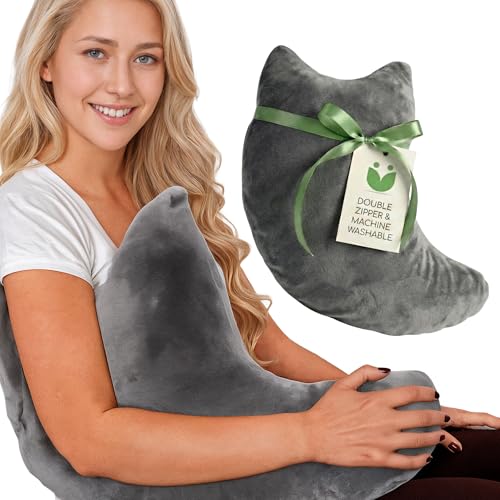
AbleUplift Rotator Cuff Pillow Gray

Eliteguard Side Sleeper Pillow with Arm Hole 6″
The Strengths Of Each Pick
A small velvet-wrapped cylinder that earns its place on the nightstand, the couch, and the car seat. At 13 inches long and 6 inches in diameter, the 1 MIDDLE ONE bolster is sized for travel, so it slips behind your back on long drives or tucks between your knees without taking over the bed.
Unlike the contoured picks later in this list, this one stays neutral. Side sleepers who just want a soft buffer between shoulder and mattress get a friendly introduction. You may find the 6-inch diameter a touch slim for taller frames, but for most people it’s a dependable starter.
Key Advantages
- Removable velvet cover is easy to toss in the wash and feels soft against bare skin.
- Compact 13-inch footprint stores inside a closet or carry-on with no fuss.
- Works as a knee spacer, lumbar support, or neck roll depending on the moment.
- Light enough to reposition mid-sleep without waking your partner.
Things To Consider
- The bolster shape does not cradle an arm the way contoured picks like the AM AEROMAX do.
- Owners commonly report the cylinder flattening a little over many months of nightly use.
Who It Suits Best
Side sleepers who want a budget-friendly, multi-purpose bolster rather than a dedicated arm cradle.
Consider Something Else When
Side sleepers with chronic arm numbness should reach for the AM AEROMAX Memory Foam Side Sleeper Pillow 7 Inch, which has a purpose-built arm channel.
The btasleeep pillow is shaped like a crescent moon, and that curve is the whole point. The dip gives your shoulder somewhere to sink while the pillow’s edges support your neck and the side of your head, so your spine stays roughly level instead of tilting.
Inside, shredded memory foam can be pulled out or added back through the zippered cover, which means the loft grows with you. Side sleepers who switch between standard and king pillow cases have a flexible option, and the included extra fill extends the customization even further. The trade-off shows up in fluffing: shredded foam shifts, so a nightly plump is part of the deal.
Advantages To Know
- Curved crescent leaves breathing room for the shoulder rather than fighting it.
- Shredded memory foam is adjustable, so the pillow softens or firms up to match your build.
- Cooling cover helps the surface stay comfortable through warm nights.
- Extra fill ships in the box for sleepers who want extra loft later on.
Honest Caveats
- Shredded fill needs daily fluffing to keep its shape from clumping.
- Wider shoulders may still feel the edge of the curve after a full night.
Made For
Side sleepers who want a customizable, contoured pillow and don’t mind a nightly fluffing habit.
Look Elsewhere When
Post-surgery shoppers should consider the Cheer Collection W-Shaped Shoulder Pillow, which targets shoulder and arm recovery more directly.
The W shape on this Cheer Collection pillow creates two soft valleys that cradle the upper arm and elbow, which is exactly the geometry a healing shoulder wants. At roughly 23.5 x 14 x 6 inches, the pillow is large enough to keep the arm propped without sliding off.
You won’t tuck this one behind your head. It’s built for the recovery window after rotator cuff or shoulder surgery, where the goal is steady elevation and minimal rolling. The honest read is that it’s a specialized tool: brilliant for healing, awkward as a daily sleeper pillow.
Where It Excels
- W-shaped contour holds the upper arm and elbow in an elevated, stable position.
- Generous 23.5-inch length spans from shoulder to wrist, reducing the need to re-stack cushions.
- Pairs well with a sling since the arm rests on top rather than dangling.
Trade Offs
- Too bulky to use as a regular under-the-head pillow.
- Limited use once recovery is complete, so it has a short life in the linen closet.
Best Suited To
Anyone in the first weeks after rotator cuff, labrum, or shoulder replacement surgery who needs arm elevation while sleeping or resting upright.
A Better Fit Elsewhere
Healthy side sleepers who don’t need post-surgery positioning will find more everyday use in the btasleeep Curved Side Sleeper Pillow Queen Size.
Take the W-shaped Cheer Collection design and add an adjustable strap, and you get this version. The strap wraps around the torso to keep the pillow from migrating when you shift, which matters more than it sounds in the first month after surgery.
Restless sleepers benefit most, since the common complaint with wedge-style recovery pillows is the midnight hunt for a pillow that slid to the wrong side of the bed. The catch is that the strap adds a step to setup and isn’t always comfortable against bare ribs.
Well-Handled Touches
- Adjustable strap keeps the pillow in position through position changes.
- Same W-shape geometry as the strapless version, so support stays consistent.
- Helpful for caregivers who don’t want to reposition the pillow every hour.
Points To Keep In Mind
- Strap pressure against the ribs can feel noticeable for smaller frames.
- Putting it on takes an extra minute compared to a plain bolster.
Who Will Love This
Active sleepers in early post-shoulder-surgery recovery who keep losing traditional recovery pillows mid-sleep.
Skip It When
You don’t need the strap retention; the strapless Cheer Collection W-Shaped Shoulder Pillow covers the same shape with less fuss.
At 29.5 inches, the Peallow bolster stretches from your armpit to your knees, and that length is what makes it feel like a hug. Side sleepers who curl around a pillow get the full contact, while the high-density polyester fill keeps the shape honest through the night.
Compared to the smaller 1 MIDDLE ONE cylinder, this one takes over a chunk of the bed, so it’s a better match for solo sleepers or generous mattresses. The polyester fiber holds its shape better than loose fill, but over many months some flattening is reasonable to expect.
The Helpful Details
- 29.5-inch length cradles from chest to knees in one continuous bolster.
- High-density fiber stays supportive without feeling rock-hard.
- Doubles as lumbar support when propped against the headboard for reading.
Some Limits To Know
- Long shape eats up real estate on a twin or full mattress.
- Single colorway limits matching to existing bedding.
Perfect Match For
Side sleepers who want to wrap their whole arm and a leg around a single pillow, especially in colder months.
Another Choice May Suit
Tight bedroom sleepers should look at the AM AEROMAX Memory Foam Side Sleeper Pillow 7 Inch, which delivers arm relief in a much smaller footprint.
The AEROMAX pillow is the pick most people picture when they think of an arm pillow for side sleeping. A curved channel runs along the bottom so your arm and shoulder can settle into the gap, while medium-density memory foam supports your head and neck at a balanced 7-inch loft.
At roughly 20 x 10 inches, the footprint is closer to a standard pillow than the bulky recovery options earlier in the list. You may find the 7-inch height perfect for average frames, though broader shoulders can still feel a hint of pressure on the upper arm where the foam meets the channel.
Useful Touches
- Curved underside lets the lower arm rest naturally instead of getting pinned.
- Memory foam core keeps its loft across the night without constant fluffing.
- Mid-level 7-inch height suits most side sleepers without cranking the neck up.
Things To Weigh
- Memory foam can sleep warm in summer, depending on room temperature.
- Broader shoulders may brush the edge of the channel by morning.
The Right Fit
Side sleepers who wake up with numb arms and want a purpose-built channel rather than a makeshift rolled towel.
Reach For A Different Pick When
Petite frames that find 7 inches too tall should try the Eliteguard Side Sleeper Pillow with Arm Hole 6in Height instead.
Functionally identical to the white AEROMAX, the blue version answers the most common AEROMAX complaint: heat. The cover is the same arm-friendly curve, but the colorway and outer fabric lean cooler to the touch, which is a small but real comfort on warm nights.
Side sleepers in hot bedrooms or anyone going through summer humidity gets the same 20 x 10 x 7-inch memory foam build, just dressed in a cooler palette. The honest read is that the core experience matches the white model, and the difference is largely aesthetic plus a touch of surface feel.
Why It Works Well
- Cooler-touch cover suits warm bedrooms and hot sleepers.
- Same arm channel geometry as the white AEROMAX for familiar support.
- Memory foam core keeps the loft steady across the night.
Where It Is Less Suited
- Cover color may not match every bedding set.
Who Should Grab It
Warm-sleeping side sleepers who already trust the AEROMAX shape but want a cooler surface.
Swap It Out When
You want a washable medical-grade cover instead; the AbleUplift Rotator Cuff Pillow Black is built for that.
The AbleUplift design uses a deep contour to keep the arm and shoulder in a steady recovery position, with a double-zipper system that pulls the cover off for a cold-water machine wash. Inner access to the fill lets caregivers tune firmness without buying a second pillow.
The black colorway hides the inevitable post-surgery ointments and adhesive residue better than light fabrics. You may find the foam density firm for casual sleeping, since this is a clinical tool more than a comfort upgrade, but for the recovery window the trade is fair.
What Earns Its Place
- Double-zipper cover unzips for easy cold-water machine washing.
- Inner zipper grants access to the fill for firmness adjustments.
- Ergonomic contour cradles the arm after rotator cuff or labrum surgery.
- Dark cover hides ointments and adhesive marks during recovery.
Potential Drawbacks
- Firmer feel suits medical use more than everyday lounging.
- Bulky profile crowds the bed once both partners are accounted for.
Right Fit For
Recovery patients and caregivers who prioritize cleanability and adjustable firmness over plush comfort.
Where A Sibling Pick Shines
Anyone wanting a softer everyday feel should look at the Cheer Collection W-Shaped Shoulder Pillow instead.
The gray AbleUplift keeps the same dual-zipper architecture as the black version but softens the visual footprint, which matters if the pillow is going to live on the bed long after the sling comes off. The inner fill is polyester, easy to add or remove through the inner zipper.
Healing joints respond to slightly different pressures from week to week, and that tunability is the real reason this pillow earns its slot. The trade is that polyester fill flattens faster than memory foam, so a weekly fluff or refill keeps the support honest.
Strong Points
- Inner zipper exposes the fill for quick firmness adjustments.
- Removable outer cover is machine-washable in cold water.
- Neutral gray color blends with most bedroom palettes.
A Few Limitations
- Polyester fill flattens faster than memory foam, so it needs periodic refluffing.
- Less contour than W-shaped recovery designs for very specific surgical holds.
Built With In Mind
Recovery patients who want a tunable pillow that doubles as a long-term bedroom piece rather than a closet-bound medical tool.
Not Your Match When
You need a strap to lock the pillow in place; the Cheer Collection Strap Shoulder Pillow handles that need.
Same family of arm-hole contour as the AEROMAX picks, but trimmed down to a 6-inch loft. Petite frames, smaller shoulders, and people who prefer a flatter pillow get the same arm channel without the head being pushed up at an awkward angle.
Compared to the 7-inch AEROMAX, this one feels more like a low standard pillow, which is a plus for stomach-leaning side sleepers and a minus for broader-shouldered folks. The trade-off is straightforward: pick the loft that matches the distance from your ear to the mattress, not the loft that looks tallest on the page.
What Works In Its Favor
- Lower 6-inch loft suits smaller frames and stomach-leaning side sleepers.
- Built-in arm channel keeps the lower arm from going numb.
- Clean white cover photographs well and pairs with most bedding.
Where It May Fall Short
- Loft can feel too low for broader shoulders or thicker mattresses.
- Single colorway limits matching options.
Whose Shelf It Belongs On
Petite side sleepers, teens, and anyone who has bounced off taller contoured pillows in the past.
Where Another Pick Suits Better
Average to broad-shouldered adults get a better fit from the AM AEROMAX Memory Foam Side Sleeper Pillow 7 Inch White.
What Matters Most Before Choosing Arm Pillows For Side Sleepers
Match The Loft To Your Frame
The pillow’s height, also called loft, is the distance from the mattress to the crown of your head when you lie on your side. Too low and your neck tilts toward the mattress; too high and your neck cranks the other way. Petite frames usually want a 5 to 6 inch loft, average builds settle into 6 to 7 inches, and broader shoulders often need 7 inches or more to keep the spine level.
Decide Between Contour, Channel, And Bolster
Contoured crescent pillows, like the btasleeep, hug the head and leave a shoulder pocket. Arm-channel designs, like the AEROMAX and Eliteguard, focus on a tunnel for the lower arm. Long bolsters, like the Peallow, give you a full-length body pillow to wrap around. Each geometry solves a different problem, and the right one depends on whether numbness, shoulder collapse, or full-body cuddling is your main complaint.
Fill Material Sets The Feel
Memory foam, which is a viscoelastic foam that molds to pressure and heat, delivers steady support and holds its shape night after night. Shredded memory foam adds adjustability but needs fluffing. Polyester fiber is lighter, cooler, and easier to wash, though it flattens faster. Your climate and patience for maintenance should drive this call.
Recovery Use Changes The Math
Post-surgery shoppers want a wider, more contoured surface than everyday sleepers. Look for washable covers, adjustable fills, and the ability to keep the arm elevated without constant repositioning. A regular side sleeper pillow rarely covers the demands of a healing shoulder.
Key Considerations Across These Picks
Where Shoppers Go Wrong
Picking a pillow by loft number alone skips the body shape that actually matters. Many shoppers assume “higher loft” equals “more support” when the opposite can over-flex a smaller neck. Another trap is choosing a recovery pillow for everyday sleep, then wondering why it feels like a clinical wedge by week two. Match the geometry to the problem, and you’ll skip both mistakes.
What The Higher Tier Buys
Spending up usually means denser memory foam, a washable cover, and a tunable fill. Those features translate to a pillow that holds its shape across years instead of months, and a cover that survives the inevitable laundry cycle. For nightly use, the upgrade pays off through comfort and longevity. For occasional use, a basic bolster handles the job without the higher tier.