

Sniffles that spike at bedtime, itchy eyes the moment your head hits the pillow, a partner who sleeps beside a shedding dog; bedroom allergies are sneaky because the trigger is also where you spend a third of your day. The right sleep setup, mixing protective encasements, breathable mattress builds, and a few well-chosen helpers, can take a real edge off. This roundup walks through ten options that tackle allergens from different angles, so you can match the fix to your specific sleep situation.
A Quick View Of The Lineup

Avenco 12 Inch Hybrid Queen Mattress (Fiberglass Free)

Earthing Elite Sleep Mat Kit (Grounding Mat)

Sealy Posturepedic Allergy Protection Mattress Protector (Twin)

Hygea Natural Vinyl Mattress & Box Spring Cover (Twin)

SafeRest CloudGuard Quilted Mattress Protector (Queen)
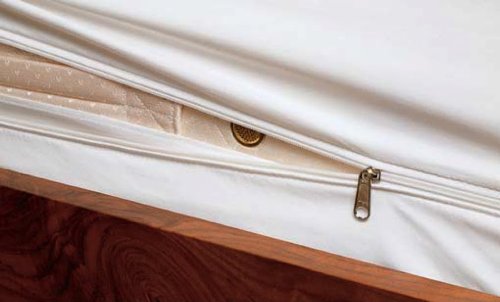
Mission: Allergy Premium Microfiber Mattress Encasing (Queen)

AllerEase CleanBoost Waterproof Mattress Protector (Queen)

FAUNNA 100% Cotton Mattress Encasement (Queen 12)

Allergy Relief Circular Knit Mattress Protector (Full)

Candy Mattress Vacuum Cleaner with HEPA Filter
A Deeper Look At The Lineup
The Avenco 12 Inch Hybrid Queen Mattress lands at the top of this list because it tackles allergies from the mattress core outward, not just at the surface. Its pocket-coil system (hundreds of individually wrapped springs that move independently) absorbs motion transfer so partners stop disturbing each other, while a fiberglass-free build removes a common irritant that some lower-cost hybrid beds still hide inside their fire barriers.
Hypoallergenic materials and CertiPUR-US certified foam make this a sensible pick for households where someone wakes up congested. The bed-in-a-box format ships compressed, so setup is manageable in tight hallways and upstairs bedrooms without a delivery crew.
What Works In Its Favor
- Pocket coils reduce motion transfer, a real perk when one partner is a restless sleeper
- Fiberglass-free construction removes a known irritant from the inner layers
- CertiPUR-US certified foam gives documented content transparency
- Bed-in-a-box delivery suits apartments and rooms with tricky access
- No box spring required, simplifying setup and reducing cost
Points To Keep In Mind
- Hybrid coils add weight, so moving or rotating the mattress takes two people
- Off-gassing is common with bed-in-a-box deliveries; airing the room for the first 24-48 hours helps
- Queen size only matches the listed configuration, so shoppers wanting other sizes should check availability
Feature Snapshot
Who It Suits Best
Couples and allergy-prone adults who want a full new mattress with motion isolation and clean materials, without paying premium boutique prices.
Consider Something Else When
Shoppers who already own a comfortable mattress and only need a surface-level barrier should look at the Mission: Allergy Premium Microfiber Mattress Encasing instead.
The Earthing Elite Sleep Mat Kit takes a different angle on the allergy conversation by focusing on the body’s connection to ground while sleeping. Grounding (sometimes called earthing) is the practice of connecting the body to the Earth’s surface charge through a conductive surface, in this case a mat that tucks under your fitted sheet and plugs into a grounded wall outlet.
It pairs with a U.S. safety adapter and an outlet checker so you can confirm your wiring before nightly use. The mat itself uses a vegan-leather, vinyl-free PU resin infused with carbon pigment, an unusual material choice that some wellness-focused shoppers actively look for.
Where It Helps
- Compatible with any size bed, so it travels with you during moves
- Non-toxic, vinyl-free construction for households avoiding PVC
- Includes an outlet checker to confirm proper grounding before sleep
- Slim profile slides beneath a fitted sheet without changing bed height
Trade-Offs To Consider
- Requires a properly grounded wall outlet; older homes may need an electrician
- Grounding claims sit in the wellness category, so skepticism is reasonable
- Does not physically block dust mites or pet dander like an encasement does
Made For
Wellness-minded sleepers curious about grounding who already have a comfortable mattress and clean bedding in good shape.
Skip It When
Anyone with severe dust-mite allergies will get more measurable relief from the Mission: Allergy Premium Microfiber Mattress Encasing.
Sealy’s Posturepedic Allergy Protection Mattress Protector brings a familiar bedding brand into the allergen-barrier space. Unlike the basic fitted protectors that only cover the top, this one zips around all six sides, sealing the mattress from dust mites, pollen, and pet dander that settle deep into the foam.
It also layers in a waterproof backing, so accidental spills do not soak into the mattress. For parents of bedwetting kids or anyone who shares a bed with a snoring pet, that dual protection is genuinely useful. Machine washable care keeps maintenance simple.
Strengths Worth Knowing
- Full encasement design seals all six sides against allergen penetration
- Waterproof layer prevents spills from reaching the mattress core
- Machine washable for routine deep cleans
- Backed by a major bedding brand with established retail presence
Honest Caveats
- Twin size limits fit; larger mattresses need a different size option
- Zippered encasements can feel slightly noisier than fitted-only styles
Right Fit For
Twin-bed households, kids’ rooms, and guest rooms where full allergen sealing matters more than surface plushness.
Not Your Match When
Sleepers wanting extra cushioning on top of their mattress will prefer the padded feel of the SafeRest CloudGuard Quilted Mattress Protector.
The Hygea Natural Vinyl Mattress and Box Spring Cover is built for situations where the bed faces serious moisture and contamination risk. Constructed from heavy-duty 6-gauge vinyl, it is the kind of cover you find in hospitals, nursing homes, and care facilities, places where allergen and fluid control is a daily operational concern.
At home, that translates well to households managing bedwetting, incontinence, heavy sweating, or post-illness cleanup. The full zippered encasement covers the mattress and the box spring, blocking dust mites while also sealing out stains, sweat, and odors.
Features That Help
- Heavy 6-gauge vinyl resists tears and punctures during installation and use
- Complete encasement blocks dust mites and bed bugs at the seam level
- Includes a matching box spring cover for full bed system protection
- Wipes clean easily with standard household disinfectants
Less Ideal Details
- Vinyl does not breathe, so warm sleepers may notice trapped heat
- Crinkling sound during movement can bother light sleepers
- Twin size only matches the listed configuration
Best Suited To
Caregivers, care facilities, and homes managing incontinence or heavy soiling where easy sanitation outweighs comfort concerns.
Reach For A Different Pick When
Anyone seeking a quieter, more breathable encasement for everyday sleep will find the FAUNNA 100% Cotton Mattress Encasement more comfortable.
Most allergy-focused mattress protectors treat comfort as an afterthought, but the SafeRest CloudGuard takes the opposite bet. It adds a quilted, padded layer to the top of the mattress, essentially a thin pillow-top built right into the protector, so you get an extra dose of softness without stacking a separate topper.
Beneath that cloud-soft quilt sits a waterproof barrier, the kind of dual-purpose build that suits bedrooms where someone is sick, sharing snacks in bed, or recovering from a spill. For sleepers whose main complaint is a too-firm mattress, this single product can change the feel of the bed.
Positive Takeaways
- Quilted top adds noticeable plushness on top of firm mattresses
- Waterproof backing shields against accidents and sweat
- Combines a mattress pad and protector in a single layer
Worth Noting
- Extra padding adds visible bulk, which can shift how fitted sheets sit on the bed
- Quilted protectors tend to retain more heat than flat weaves
Who Will Love This
Side sleepers and anyone on a firm mattress who wants allergy protection without giving up cushioning.
Look Elsewhere When
Hot sleepers in warm climates will likely sleep cooler on the FAUNNA 100% Cotton Mattress Encasement instead.
The Mission: Allergy Premium Microfiber Mattress Encasing is the most technically focused option on this list. Its tightly woven microfiber fabric is engineered to a mean pore size of around 2 microns (a micron is one-millionth of a meter, and 2 microns is small enough to block dust-mite waste and most pollen), yet it stays air-permeable so you do not sleep hot and sweaty the way membrane-based encasings often cause.
That balance is the whole pitch. Severe allergy households frequently complain that protective covers feel like plastic sheets, and this one is specifically designed to avoid that trade-off. At 12 inches deep, it fits standard pillow-top mattresses without bunching.
Everyday Perks
- Tightly woven fabric physically blocks dust-mite allergens from passing through
- Air-permeable weave avoids the heat-trap problem of membrane covers
- Silky soft hand-feel stays quiet under sheets
- 12-inch depth accommodates pillow-top mattresses
Small Caveats
- Premium microfiber carries a higher cost than basic encasements
- Long-Twin size dimension listed reflects the specific variant offered
Quick Facts
Perfect Match For
Households managing severe dust-mite allergies, asthma, or eczema who want a clinically minded barrier without sacrificing comfort.
Swap It Out When
Shoppers wanting a softer, pad-like surface should pick the SafeRest CloudGuard Quilted Mattress Protector instead.
AllerEase built the CleanBoost around an interesting idea: rather than just blocking allergens, the fabric uses enzyme action to actively reduce common household particles between washes. The brand calls it CleanBoost technology, and the practical pitch is that your bed keeps working at allergen control even on day 14 of the same fitted sheet.
The protector itself uses a soft circular knit (a knit fabric with loops that create small air channels, helping with breathability) on top, with moisture-wicking properties and a waterproof layer underneath. For pet households where dander builds up faster than you can do laundry, the enzyme approach is a real differentiator.
Strong Points
- Enzyme-treated fabric works between wash cycles, not just on laundry day
- Soft circular knit top wicks moisture for cooler sleep
- Waterproof layer keeps the mattress safe from spills and accidents
- Tightly woven construction blocks common allergens
A Few Limitations
- Enzyme effectiveness diminishes over time and with repeated washings
- Fitted-style design leaves the bottom of the mattress exposed
Whose Shelf It Belongs On
Pet owners and busy households who want everyday allergen defense without committing to zippered full encasements.
A Better Fit Elsewhere
Anyone needing full six-sided coverage should choose the Sealy Posturepedic Allergy Protection Mattress Protector instead.
For shoppers who want to keep synthetic materials out of the bedroom entirely, the FAUNNA 100% Cotton Mattress Encasement is one of the cleanest options on this list. Cotton is naturally breathable, naturally hypoallergenic, and gets softer with each wash, which makes it a comfortable long-term bedding choice.
Beyond comfort, the encasement protects against bed bugs and dust mites, two of the most stubborn bedroom pests. Sensitive-skin sleepers and parents setting up a nursery tend to gravitate toward cotton for exactly these reasons: the fabric feels familiar, washes easily, and avoids the off-gassing concerns of newer synthetic blends.
Practical Pluses
- 100% cotton construction is naturally breathable and skin-friendly
- Full encasement protects against both bed bugs and dust mites
- Naturally hypoallergenic with no synthetic coatings
What To Weigh
- Cotton wrinkles more than synthetic blends and may need smoothing after washing
- No waterproof layer, so it does not protect against spills
The Right Fit
Adults and children with sensitive skin, eczema, or chemical sensitivities who prefer natural fibers throughout the bedroom.
Where A Sibling Pick Shines
Bedrooms needing waterproofing alongside allergen control should pair this with the AllerEase CleanBoost Waterproof Mattress Protector on top.
The Allergy Relief Circular Knit Mattress Protector solves a problem that frustrates a lot of shoppers: finding a protector that actually fits a deep mattress. With a stretch profile that fits mattresses up to 18 inches deep, it covers pillow-tops, hybrid builds, and even some ultra-thick mattress-and-topper combinations without popping off the corners.
The top surface uses a soft circular knit with stain-release treatment, which is a small but meaningful detail. Coffee, sweat, and other everyday messes release more easily in the wash, so the protector keeps looking fresh longer. It is also fully waterproof, machine washable, and pulls over the corners without a struggle.
What Pays Off
- Stretches to fit mattresses up to 18 inches deep
- Stain-release treatment simplifies wash-day results
- Fully waterproof design handles spills and accidents
- Soft circular knit top layer feels comfortable against the skin
Small Limitations
- Full size only matches the listed configuration
- Fitted style leaves the bottom of the mattress exposed to allergens
Built With In Mind
Sleepers with tall pillow-top or hybrid mattresses who keep finding that standard protectors slip off the corners.
Another Choice May Suit
Anyone needing full six-sided allergen sealing should consider the Sealy Posturepedic Allergy Protection Mattress Protector instead.
Encasing the mattress blocks future allergens, but what about the dust already living in your pillow, comforter, and carpet? The Candy Mattress Vacuum Cleaner is built specifically for that job, with a 350W handheld body, a HEPA filter (HEPA stands for High-Efficiency Particulate Air, a filter standard that captures 99.97% of particles down to 0.3 microns), and a UV sanitizing light for surface treatment.
The HEPA filter is the real star for allergy households, since standard vacuums often blow fine particles back into the air. The UV light adds an extra layer of cleaning for surfaces the suction alone cannot reach, with an auto shutoff feature that protects both the device and your fabrics from overexposure.
The Upside
- HEPA filter captures fine particles that ordinary vacuums recirculate
- UV sanitizing light adds surface-level disinfection
- Works on mattresses, pillows, upholstery, and car interiors
- Washable filter cuts long-term replacement costs
Where It Is Less Suited
- Handheld format means longer cleaning sessions on large mattress surfaces
- 0.4L dust cup fills quickly in heavy-shedding homes
Who Should Grab It
Allergy households with shedding pets, multiple soft surfaces, or bedding that needs regular deep cleaning beyond a standard vacuum.
Where Another Pick Suits Better
Shoppers who only need passive allergen control without routine vacuuming should start with the AllerEase CleanBoost Waterproof Mattress Protector.
What To Look For Before Choosing An Anti-Allergy Mattress Setup
Understanding Allergen Barriers vs Allergen-Resistant Mattresses
The phrase “anti-allergy mattress” covers two very different product types, and knowing the difference saves a lot of confusion. A genuinely hypoallergenic mattress (like the Avenco 12 Inch Hybrid Queen Mattress) is built from the inside out with materials that resist mold, dust mites, and off-gassing, often with fiberglass-free fire barriers and certified foam. An allergen-barrier encasement (like the Mission: Allergy Premium Microfiber Mattress Encasing) wraps your existing mattress to physically block particles from entering or escaping the foam. The best setups usually combine both: a clean-core mattress plus a tightly woven encasement on top.
Weave Tightness, Pore Size, and Fabric Choices
Fabric pore size matters more than most people expect. A pore size of around 2 microns blocks dust-mite waste particles, while looser weaves let allergens pass through. Cotton, microfiber, and tightly knit synthetics each handle this differently. Cotton breathes beautifully but generally offers less filtration than a purpose-built microfiber. Vinyl stops everything but traps heat. Match the fabric to your dominant concern: dust mites and dander favor tight microfiber; heat and comfort favor cotton.
Size, Depth, and Real Mattress Fit
Measure your mattress depth before buying any protector or encasement. Standard mattresses run 8 to 12 inches deep, but pillow-top and hybrid models often reach 14 to 18 inches. A protector that fits an 8-inch profile will pop off the corners of a 16-inch bed within a week. The Allergy Relief Circular Knit Mattress Protector is a good reference for stretchy, deep-pocket design.
Key Considerations Across These Picks
Pitfalls Shoppers Hit
The most common mistake is buying a protector based on price alone and ending up with vinyl that crinkles, traps heat, or tears within a year. Another frequent slip-up is assuming a mattress label that says “hypoallergenic” means the bed is sealed against dust mites; it usually means the foam content is cleaner, not that particles cannot accumulate inside. Pair any new mattress with a real allergen encasement, and check whether your existing pillows and comforters need similar treatment, since they are usually bigger dust-mite reservoirs than the mattress itself.
What Separates Premium From Basic
Higher-end options in this category tend to invest in two areas: fabric engineering and verified certifications. A premium microfiber weave with documented pore size (like the Mission: Allergy encasement) is a meaningful upgrade over a generic tight-weave cover. The upgrade also shows up in foam certifications, fiberglass-free fire barriers, and dual-function builds (the SafeRest CloudGuard adds a quilted pad to the same product, for instance). The extra cost makes sense in households with severe allergies; for mild, seasonal sensitivity, a mid-range encasement plus routine washing is often enough.
Frequently Asked Questions
How often should I wash my allergy mattress protector?
Most manufacturers recommend washing every two to four weeks in warm water, which removes accumulated dust-mite allergens and body oils. Hot water above 130°F is more effective at killing dust mites, so check the care label to confirm the fabric can handle it without shrinking.
Can a mattress protector alone solve nighttime allergies?
A high-quality encasement makes a significant difference, but complete relief usually requires treating pillows, comforters, and bedroom humidity as well. Dust mites thrive above 50% relative humidity, so a dehumidifier or air-conditioner often pairs well with the right encasement.
Do anti-allergy mattresses need replacing sooner than regular ones?
Not necessarily. A well-made hypoallergenic mattress with a fiberglass-free build and CertiPUR-US foam can last just as long as a standard mattress, typically seven to ten years, provided you rotate it and keep it encased. The encasement itself should be replaced every few years, since the fabric weave degrades with repeated washing.
Is a waterproof layer important for allergy mattresses?
Waterproofing protects against spills, sweat, and accidents, but it is not strictly required for allergen control. If moisture is not a concern in your bedroom, a breathable non-waterproof encasement like the FAUNNA cotton cover may actually sleep cooler. If you have kids, pets, or share the bed with a partner who runs hot, waterproofing adds meaningful protection.
Are anti-allergy mattresses safe for people with chemical sensitivities?
Most are, especially those carrying CertiPUR-US certification or made with natural fibers like cotton. If chemical sensitivity is severe, look for mattresses and protectors that explicitly avoid fiberglass, synthetic flame retardants, and vinyl, and air out any new foam product for 24 to 48 hours before use.
Wrap Up
The right anti-allergy sleep setup is rarely one product. A clean-core mattress, a tightly woven encasement, and a regular cleaning routine do more together than any single item can alone. Start with the allergen source that bothers you most, dust mites, pet dander, or material sensitivities, and build outward from there. Your sinuses will tell you within a week whether the change is working.