

Air mattresses work in a pinch, but the slow leak at 3 a.m., the vinyl sheen, and the wobbly posture leave a lot of people hunting for something sturdier. The good news: a wide range of foam futons, memory foam camping pads, cot-toppers, and self-inflating mats now serve as reliable substitutes for guest beds, camping trips, dorm rooms, and recovery setups. Below is a lineup of nine strong picks, each picked for a specific kind of sleeper and scenario.
The Lineup, Simplified

CYMULA Memory Foam Camping Mattress Pad with Non-Slip Bottom
ZonLi Japanese Floor Mattress Futon Mattress Twin Size 2.5 Inch Thick
Lunderg Alternating Air Pressure Mattress Pad

Feisaibaoly 6th Generation Japanese Floor Futon Mattress Twin 9-Layer

CYMULA Camping Cot Pad 2 Inch Memory Foam with Removable Cover

jzbearapt Premium Foam Japanese Floor Mattress Futon

Pretyw Ultralight Camping Sleeping Pad with Pillow and Foot Pump

Wevelel Memory Sleeping Pad 3.1 Inch Thick with 9.5 R-Value

CYMULA Folding Mattress 6 Inch Trifold Foldable Sofa Bed
Meet The Standout Selections
The CYMULA memory foam camping pad is built for people who treat the back of an SUV like a second bedroom. Lay it across a tent floor, the cargo area, or a spare room, and the carbon-fiber-infused foam spreads pressure evenly enough to keep hips and shoulders from complaining by morning. Compared to the slim futons later in this list, this roll-up format is genuinely portable without feeling like a thin yoga mat.
It also works as a guest bed in a studio apartment, since the non-slip base grips hardwood and tile better than a typical blanket-and-pillow setup. For most weekend trips, you can store it rolled in a closet and still have floor space to spare. The trick is treating it as a serious sleep surface, not just a foam afterthought.
What It Does Well
- Memory foam construction absorbs movement and pressure across the hips and shoulders.
- Non-slip underside keeps the pad planted on tent floors and hardwood.
- Roll-up design stores in a closet or trunk without hogging space.
- Breathable cover suits shoulder seasons and warmer nights.
Points To Note
- Heavier than inflatable pads, so backpackers may want a lighter option.
- Needs a full airing-out after storage to release any compressed-foam smell.
Whose Shelf It Belongs On
Car campers, road-trippers, and anyone who wants a forgiving guest bed that lives in a closet.
Look Elsewhere When
The Pretyw Ultralight pad is a better fit for backpackers counting every gram in their pack.
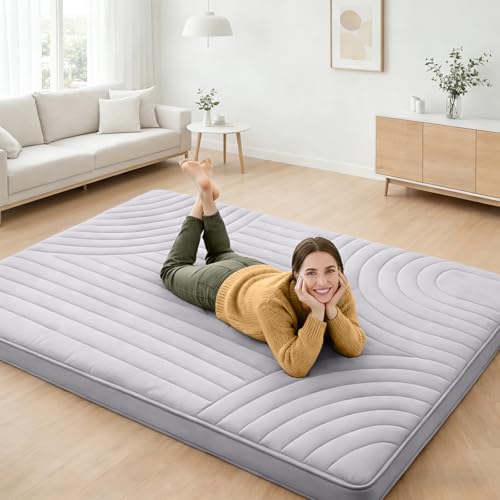
ZonLi leans into the Japanese shikibuton tradition: a slim, foldable floor mattress that disappears into a closet by day. At 2.5 inches of high-density foam, it sits closer to a yoga mat than a Western mattress, yet the support layer underneath keeps it from feeling punishing. For studio dwellers without a traditional bed frame, the format is the entire point.
It doubles as a meditation cushion base or a nap pad on a sun porch. Compared to the thicker Feisaibaoly futon further down, this one prioritizes a low profile over plush cushioning, so the trade-off is real. Side sleepers over 180 pounds may want a thicker option.
Benefits That Matter
- Zippered cover simplifies washing and keeps the foam core fresh.
- Low profile slips under most bed frames if you want a layered feel.
- Folds into a small footprint for closets and studio storage.
- Foam density offers steady support for back and stomach sleepers.
Worth Noting
- Only 2.5 inches thick, so heavy side sleepers may feel the floor through it.
- Lacks the cushioned feel of air-mattress substitutes with deeper foam layers.
Best Suited To
Apartment dwellers, minimalists, and anyone curious about Japanese-style floor sleeping in a small space.
Skip It When
The Feisaibaoly 6th Generation futon is a smarter call if you want a plusher, layered surface.
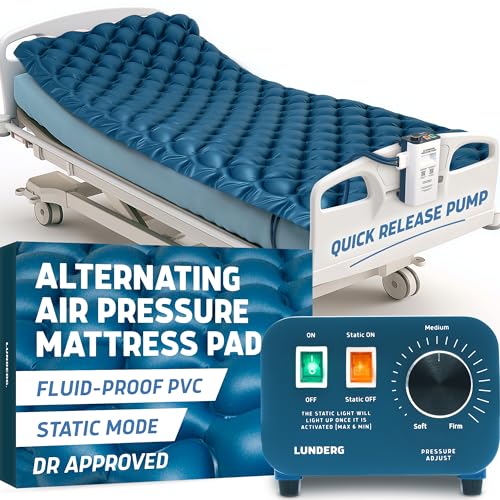
The Lunderg pad is a different animal from the foam options above. It’s an alternating pressure overlay designed to relieve pressure on skin and bony areas, with a quiet pump and a static mode for moments when steady support matters more than movement. People caring for a loved one at home, or anyone recovering from surgery, will recognize the value immediately.
It sits on top of an existing mattress rather than replacing one, so the bed underneath still does most of the structural work. The pump’s soft-to-firm control lets caregivers adjust the feel without a nurse’s call button. The 23 dBA noise level is low enough to sleep next to, which is the entire point.
Useful Highlights
- Alternating cycles reduce pressure on vulnerable skin and joints.
- Static mode gives caregivers a stable surface for transfers and repositioning.
- Quick-connect pump simplifies setup and removal for cleaning.
- Soft-to-firm pressure range adapts to body weight and comfort preference.
Things To Consider
- Requires an existing mattress underneath, not a standalone sleep surface.
- The pump needs a power outlet nearby, so placement near a wall is wise.
Feature Snapshot
Made For
Home caregivers, post-surgery recovery, and anyone managing pressure-skin concerns on a standard bed.
Not Your Match When
You just want a foam guest bed, in which case the ZonLi futon serves a much simpler role.
Feisaibaoly’s 6th-generation futon goes the other direction from the ZonLi: nine stacked layers, with five dedicated padding layers on top of a high-density foam core. The result is a floor mattress that reads more like a Western low-profile bed than a minimalist mat, which is exactly what you want for guests who aren’t used to ground sleeping.
The construction aims to keep its shape over years of folding, and at twin dimensions of roughly 39 by 80 inches, it fits standard bedding. Dorms, guest rooms, and sleepover corners are its natural homes. The honest trade-off is bulk, since nine layers do not fold quite as flat as a 2.5-inch mat.
What Helps Most
- Layered build adds cushioning without resorting to springs or coils.
- High-density foam core resists sagging through years of nightly use.
- Twin dimensions accept standard sheets and mattress protectors.
- Folds down for closet storage between guests.
Trade Offs
- Heavier and thicker than minimalist futons, so storage space matters.
- Spot cleaning is easier than tossing a nine-layer futon in a machine.
Who It Suits Best
Hosts who want a real bed feel for guests without dedicating a permanent frame.
Reach For A Different Pick When
The jzbearapt futon is a lighter, more casual option for kids’ rooms or nap corners.
Most camping cots have one shared problem: the crossbars press into your back. The CYMULA cot pad solves that by adding 2 inches of memory foam on a 75 by 30 inch footprint that lines up with standard folding cots. The non-slip, waterproof base keeps the pad locked in place even when you toss and turn.
The removable cover is the underrated detail. Airing it out after a damp weekend is simple, and you can wash the cover without wrestling the foam core. It’s a pad, not a bed, so it belongs on top of a cot rather than on the ground. For base-camp setups with a car parked nearby, that distinction is exactly the point.
The Helpful Details
- 2 inches of memory foam soften cot crossbars through the night.
- Non-slip waterproof underside keeps the pad anchored and dry.
- Removable cover simplifies airing out after damp trips.
- Roll-up format stores inside most car trunks and gear closets.
Honest Caveats
- Only fits cots near 75 by 30 inches, so measure before ordering.
- Pad-only design assumes you already own a cot frame.
Quick Facts
Right Fit For
Campers who already own a cot and want to turn it into a genuine sleep surface.
Swap It Out When
The Wevelel Memory Sleeping Pad works better for cold-weather campers without a cot frame.
The jzbearapt futon lands in a similar lane to the Feisaibaoly 6th Generation, with a multi-layer construction and high-density foam core aimed at everyday use. Where it differentiates is versatility: the format works just as well for kids’ sleepovers as it does for a dorm room or a meditation corner.
The high-density foam gives it more substance than a basic floor pad, and the tatami-style surface adds a bit of texture that grips sheets in place. Compared to the heavier Feisaibaoly build, this one reads as a touch lighter in the hand, which makes folding it away after a sleepover less of a chore.
Practical Advantages
- High-density foam holds its shape through repeated folding and use.
- Tatami-style surface texture helps sheets stay put through the night.
- Lighter than heavier nine-layer futons for easier handling.
- Works for kids, guests, and dorm set-ups equally well.
Less-Strong Areas
- Not as plush as deeper futons for adult side sleepers over 180 pounds.
- Spot cleaning works better than a full machine wash at this thickness.
Feature Card
Perfect Match For
Families needing a flexible floor mattress for kids, guests, or quiet corners.
A Better Fit Elsewhere
The Feisaibaoly 6th Generation is the upgrade pick if you want deeper cushioning for adult guests.
The Pretyw pad ditches the foam-first approach and goes self-inflating, with a built-in pillow and foot pump that means no lung-busting after a long hike. At 79 by 27.5 inches and 4 inches of thickness, it offers more sleeping real estate and cushioning than you’d expect from a backpackable pad.
The integrated pillow is the move that makes this one feel like an actual bed substitute. You stop packing a separate pillow, which is one less thing to lose on a campsite. Compared to the heavier CYMULA camping pad earlier, this one is genuinely packable, though the trade-off is less of that sink-in memory-foam hug.
Where It Helps
- Built-in foot pump inflates the pad without external accessories.
- Integrated pillow removes a packing item from the camp kit.
- 4 inches of loft cushions hips and shoulders on rough ground.
- Self-inflating design speeds up camp setup and takedown.
Small Caveats
- Lacks the deep memory-foam feel of the CYMULA memory foam camping pad.
- Foot pump adds a small learning curve for first-time setup.
At A Glance
Who Will Love This
Backpackers and casual campers who want a thicker pad without the weight of foam.
Not Your Match When
Late-season campers should consider the Wevelel pad for its higher R-value insulation.
Where most camping pads assume summer nights, the Wevelel leans into cold-weather camping. The 3.1-inch memory foam build adds real loft, and the 9.5 R-value (a measure of insulation, where higher means more warmth between you and the ground) is the headline number for shoulder-season and winter campers. R-value is how sleeping pads are judged for warmth, and 9.5 sits well into four-season territory.
The foam also inflates and deflates easily, so pack-up after a chilly morning doesn’t turn into an arm workout. It still doesn’t feel like a memory-foam bed at home, but compared to bare ground, it’s a clear upgrade. Cold sleepers will appreciate the warmth; warm-weather campers might find it overbuilt for July nights.
What Stands Out
- 9.5 R-value handles cold ground in three-season and mild winter trips.
- 3.1 inches of foam cushions against uneven tent floors.
- Quick inflate and deflate speeds up cold-morning pack-ups.
- Built-in pillow keeps the kit lean for cold-weather trips.
Worth Bearing In Mind
- Heavier than summer-only pads, so ultralight backpackers may pass.
- Insulation is overkill for hot-weather camping in the lower 48.
Product Snapshot
Built With In Mind
Cold-weather campers and shoulder-season travelers who lose sleep over frozen ground.
Where A Sibling Pick Shines
The Pretyw Ultralight pad is the better match for warm-weather backpackers.
The 6-inch CYMULA trifold splits the difference between a futon and a sofa, folding into a seat during the day and laying flat at night. It’s the most furniture-like option in this lineup, and the 6-inch foam is generous for floor sleeping, naps, and the occasional overnight guest.
It works equally well for movie nights on the living room floor and weekend camping trips. The white cover is clean-looking but practical considerations matter here: it shows stains faster than darker fabrics, so a throw blanket is your friend. Compared to the lighter futons above, this one trades a bit of portability for genuine sofa-like comfort.
What Earns Its Place
- 6 inches of foam delivers real cushioning for floor sitting and sleeping.
- Trifold design converts between sofa and bed without a frame.
- Sturdy enough for both apartment use and camping weekends.
- White cover fits modern interiors and accepts a wash between uses.
Trade-Offs To Consider
- White fabric shows dirt faster than darker futon covers.
- Heavier than slim futons, so carrying it upstairs takes some effort.
Who Should Grab It
Small-space dwellers who want one piece that flips between seating and a real guest bed.
Where Another Pick Suits Better
Travel-focused campers should look at the CYMULA memory foam camping pad for true portability.
What To Weigh Before Choosing A Replacement For An Air Mattress
Foam density, thickness, and R-value drive most of the experience. A pad’s foam density (the weight of foam per cubic foot) signals how well it holds up under nightly use, while thickness shapes how isolated you feel from the floor. For camping, the R-value tells you how much insulation sits between you and cold ground. Higher numbers handle shoulder seasons and frozen tent floors, while lower numbers suit summer trips.
Portability matters more than people expect. Roll-up pads store in closets, while fold-up futons lean toward a dedicated shelf. A camping cot pad only makes sense if a cot is already in the mix. Consider cleaning too: removable, washable covers save real headaches over years of use, while a sewn-on cover means spot cleaning for the long haul.
Match the bed to the user, not the other way around. A heavy side sleeper needs more inches and denser foam than a back sleeper. Children and guests often do fine with a thinner, lighter futon. Recovery and caregiving call for specialized overlays rather than general-purpose pads.
Finally, think about the room or tent. A studio apartment rewards a folding sofa-style mattress, while a backcountry tent rewards something that fits a packed bag. The right answer is the one that fits your space and your sleep style, not the thickest option on the page.
Key Considerations Across These Picks
Mistakes Worth Dodging
A common slip is treating foam thickness as a stand-in for comfort. Thickness helps with pressure relief, but a low-density foam at 4 inches will still bottom out, while a dense foam at 2.5 inches can feel surprisingly supportive. Always look at density alongside depth, especially for adult side sleepers.
Another trap is assuming a sleeping pad’s R-value only matters in winter. Cold ground seeps heat in any season, and shoulder months in the 40s feel far colder on a low-R pad than most people expect. Skipping insulation to save weight works in July, but bites in October.
When Paying More Pays Off
Higher-tier options tend to layer their foam, add washable covers, or carry R-values suited to real cold. The trade-off is weight and price. The upgrade is worth it for anyone who sleeps on the pad more than a handful of nights per year, since denser foam holds shape longer and better insulation handles weather you didn’t plan for. For once-a-year guests, a basic futon or foam pad usually does the job just fine.
Frequently Asked Questions
What is the best alternative to a traditional air mattress?
Foam futons and memory foam camping pads are the most popular alternatives, with roll-up memory foam pads working well for portable setups and layered futons suiting guest rooms and dorms.
Are floor futons comfortable for everyday sleeping?
A futon with high-density foam and enough thickness can support nightly sleep for many adults, especially back and stomach sleepers, though side sleepers over 180 pounds often prefer thicker options.
How does R-value affect a sleeping pad’s warmth?
R-value measures insulation between the sleeper and the ground, with higher numbers blocking more cold transfer, so an R-value above 4 handles three-season use and 9 or higher covers winter camping.
Can a foam futon be used as a guest bed?
Yes, a foldable futon with enough thickness and density works well as a guest bed, since it stores in a closet and lays out quickly when visitors arrive.
What thickness of sleeping pad is enough for car camping?
Around 3 to 4 inches of foam or self-inflating loft is generally enough for car camping, balancing cushioning and pack size for most campers.
Closing Remarks
Replacing an air mattress comes down to matching the format to the job, whether that’s a studio floor, a tent pad, a recovery bed, or a guest corner. A thoughtful pick here will outlast several vinyl mattresses, and you’ll skip the middle-of-the-night pump runs entirely. Start with the sleepers, the space, and the climate, then let those answers narrow the list for you.