

Down comforters feel dreamy until the sneezing starts, the price tag lands, or the cleaning instructions spell “dry clean only.” For anyone chasing that cloudlike drape without the allergens, the cost, or the ethical concerns, a down alternative comforter delivers the same cozy warmth from synthetic or cotton-based fills. The category has matured fast, with better breathability, smarter construction, and sizes that actually fit modern mattresses.
This roundup skips the dry-clean-only headaches and focuses on alternatives that wash at home, breathe through warm nights, and hold their loft after repeated use. Every pick suits a different sleeper, from hot bedrooms to oversized king beds, so you can match fill weight, shell fabric, and size to your own sleep setup.
The Lineup, Simplified
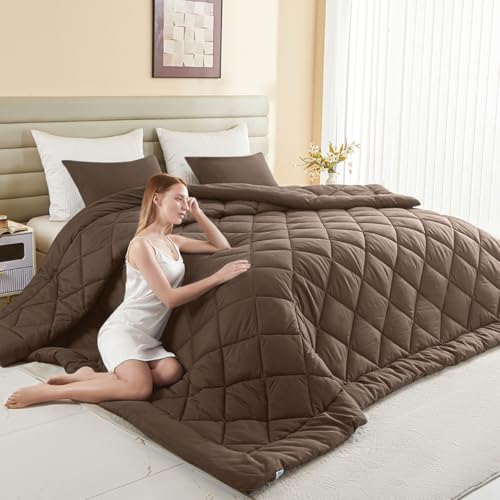
MIOTO Oversized King Down Alternative Comforter 120×128
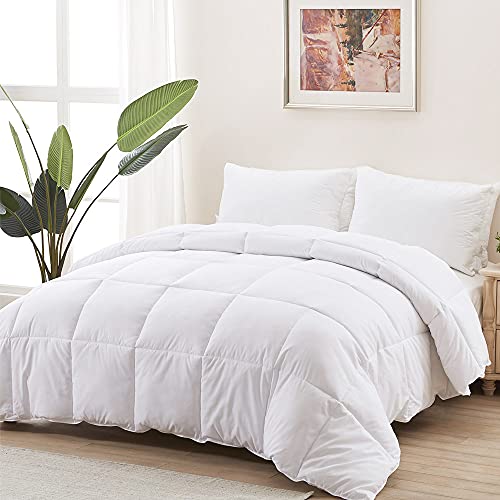
ACCURATEX Duvet Insert Queen 400GSM 90×90

Vexino Feather Down Fiber Comforter 100% Cotton
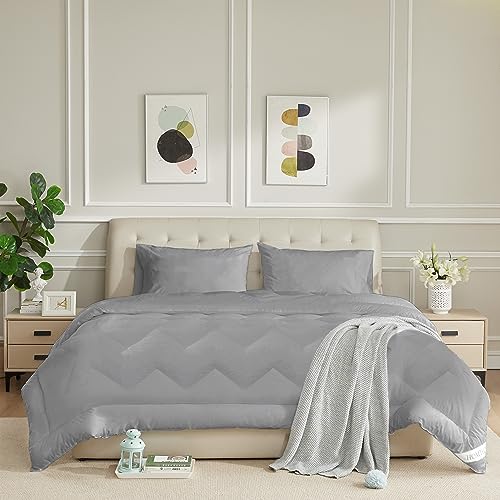
HOMTEC Cotton Comforter Queen Dark Gray
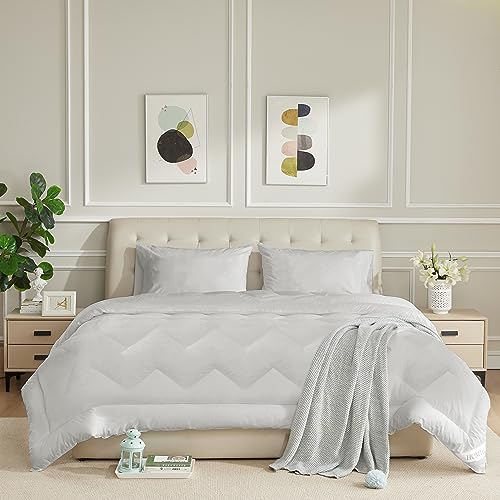
HOMTEC Cotton Comforter Queen Light Gray

Mellow Marshmellow Comforter Sand Full/Queen

Mellow Marshmellow Comforter Full/Queen

Moonsea Down Alternative Comforter Queen White 88×88

Moonsea Down Alternative Comforter Navy Full/Queen

Moonsea Down Alternative Comforter Grey Queen/Full
A Breakdown Of The Leading Choices
If your king mattress swallows regular comforters and leaves you fighting your partner for the covers, the MIOTO oversized king measures a generous 120 by 128 inches. That extra width drapes fully down both sides, so nobody wakes up with a cold shoulder or a drafty gap. Compared to the slimmer ACCURATEX queen we cover next, this one is built for shared sleep and restless kids who migrate horizontally overnight.
Eight corner tabs keep a duvet cover locked in place through tossing, turning, and weekly washes. Owners commonly report the fill staying evenly distributed rather than pooling at the foot. The all-season weight should suit most climates, though very warm sleepers may find it a touch cozy in summer.
Reasons It Performs
- Extra-wide footprint covers a full king bed with side drape
- Eight corner tabs anchor a duvet cover securely
- All-season weight balances warmth without heavy bulk
- Down alternative fill suits allergy-prone households
- Generous dimensions prevent nightly tug-of-war
Things To Consider
- May run warm in hot summer bedrooms with limited airflow
- Brown color limits layering with bright duvet covers
- Bulkier footprint may overwhelm smaller bedroom layouts
At A Glance
Who It Suits Best
Couples sharing a king bed, families with kids who climb in, and sleepers who want generous coverage without nightly rearranging.
Where Another Pick Suits Better
Sleepers in warmer climates or smaller rooms may prefer the breathable cotton shell of the Vexino Feather Down Fiber Comforter instead.
GSM, short for grams per square meter, tells you how heavy and insulating a comforter’s fill actually is. The ACCURATEX lands at 400GSM, which puts it firmly in the warm-and-weighty category. That heft makes it a winter workhorse, especially in homes where the thermostat dips overnight or the bedroom sits over an unheated garage.
Wrapped in peach skin fabric, a tightly woven microfiber with a soft brushed finish, the shell feels gentle against bare skin. Unlike the Vexino’s all-cotton build, this one leans on synthetic fibers throughout, which translates to easier machine washing and quicker drying. Sleepers who run cold year-round get the most from this weight.
A Few Highlights
- 400GSM fill delivers strong warmth for cold rooms
- Peach skin shell holds up to repeated machine washing
- Queen size at 90×90 inches fits standard duvet covers
Worth Noting
- Heavy weight can feel stifling in summer or warm climates
- Synthetic shell may trap heat for hot sleepers
- Bulkier fill takes longer to dry after washing
Best Suited To
Cool bedrooms, winter-only use, and sleepers who feel chilled under lighter year-round comforters.
Consider Something Else When
Hot sleepers or anyone in a mild climate will likely overheat under 400GSM; the HOMTEC 200GSM cotton comforter offers a more breathable year-round alternative.
Natural cotton shells breathe better than synthetics, and the Vexino wraps its feather down fiber fill in 100% cotton from edge to edge. The result feels cooler against the skin and lets trapped heat escape overnight, which matters if you wake up clammy under typical polyester-backed comforters. For warm sleepers and anyone with sensitive skin, that single material upgrade can change how a bed feels in July.
Four corner tabs provide enough anchor points for a standard duvet cover, though fewer than the MIOTO’s eight. The fill mimics real down’s loft without the allergens, so you get visual fluff and that pillow-y drape without sneezing. It works across all four seasons in most climates, leaning slightly cooler than heavier picks.
Real Benefits
- 100% cotton shell improves breathability and skin comfort
- Feather down fiber fill mimics down loft without allergens
- Year-round weight suits varied climates
- Corner tabs hold a duvet cover in place
Trade Offs
- Only four corner tabs, fewer anchor points than some rivals
- Cotton shell may wrinkle more than synthetic alternatives
- Lighter weight may not satisfy cold-room sleepers
Made For
Warm sleepers, sensitive skin, and anyone prioritizing natural fibers over synthetic microfiber construction.
Not Your Match When
You need maximum winter warmth; the ACCURATEX 400GSM duvet insert delivers heavier insulation for genuinely cold bedrooms.
Wave quilting, a continuous stitched pattern that creates curved channels across the surface, does more than look tidy. The HOMTEC’s pattern locks the 200GSM down alternative fill into consistent pockets, so the comforter won’t develop thin spots or shift to one corner after months of use. For guest rooms that get laundered often, that construction detail pays off in longevity.
The dark gray color reads as a near-neutral that works in modern or traditional bedrooms without screaming for a duvet cover. Cotton shell construction keeps airflow steady through warmer months. Compared to the lighter Vexino, this one runs a touch heavier in feel thanks to the quilting density.
Useful Touches
- Wave quilting locks fill into even channels
- Cotton shell balances breathability with structure
- Dark gray tone hides minor stains between washes
Points To Keep In Mind
- 200GSM weight may run warm in hot summer bedrooms
- Dark color absorbs more visible lint and pet hair
Right Fit For
Guest rooms, everyday master bedrooms, and anyone who wants a comforter that holds its shape through frequent washing cycles.
Skip It When
You sleep hot year-round; the Mellow Marshmellow with heat-adaptive fibers manages temperature more actively.
The light gray sibling to the HOMTEC dark gray uses the same 200GSM down alternative fill and wave quilting, so the construction story carries over. Where it diverges is presentation: this lighter shade pairs naturally with soft, airy duvet covers and Scandinavian-style bedding without needing a cover at all. For a guest room or primary bedroom that leans bright and minimalist, that visual difference matters more than it sounds.
At 200GSM, the fill weight sits in the middle of the road, warm enough for mild winters and cool enough for most summer nights with a ceiling fan. The cotton shell breathes well, and the quilting keeps the polyfill from migrating over time. It’s the kind of comforter that works without thinking about it.
Useful Highlights
- Mid-weight 200GSM fill works across most seasons
- Wave quilting prevents clumping and shifting
- Light gray color complements neutral bedding palettes
Some Limits To Know
- Lighter color may show stains more readily than dark tones
- Not warm enough for unheated winter bedrooms
- Polyfill may flatten faster than down alternative microfiber
Whose Shelf It Belongs On
Anyone furnishing a versatile bedroom in a moderate climate who wants one comforter that handles spring, summer, and fall comfortably.
A Better Fit Elsewhere
Sleepers who deal with genuinely cold winters should look at the ACCURATEX 400GSM, which delivers more insulation without changing the rest of the setup.
The Marshmellow earns its name through a double-stuffed construction, which simply means the shell gets packed with more fill than a standard comforter. The result is a visibly puffy, cloudlike profile that looks like a hotel bed the moment you finish making it. OEKO-TEX Class I certification, the strictest tier of that textile safety standard, signals the fabric has been tested for harmful substances at levels safe even for babies, which matters if your household includes curious toddlers or sensitive skin.
Where the HOMTEC cotton comforters play it safe and neutral, the Mellow leans into texture and visual drama. The sand color reads warm and earthy under natural light. Compared to the flatter, more utilitarian look of the Moonsea comforters, this one is meant to be seen, either standalone or peeking out from a coordinating duvet cover.
Practical Pluses
- Double-stuffed fill creates a plush, hotel-style loft
- OEKO-TEX Class I certified for sensitive households
- Sand color works as a standalone top layer
Honest Caveats
- Higher fill volume takes longer to dry after washing
- Plush loft may feel too warm for hot sleepers
Perfect Match For
Anyone rebuilding a primary bedroom around a hotel-bedding aesthetic, particularly in cooler or moderate climates.
Another Choice May Suit
Hot sleepers and warm-climate households will find the Mellow Marshmellow’s sibling with heat-adaptive fibers, covered next, manages temperature more comfortably.
Heat-adaptive fiber is engineered to respond to body temperature, trapping warmth when you’re cold and releasing it as you heat up. The Mellow Marshmellow Full/Queen layers that technology into the same double-stuffed build as its sand-colored sibling, so you keep the plush visual while gaining active temperature management. For hot sleepers or anyone in a climate that swings between winter chill and summer humidity, that responsiveness can be the difference between restful nights and restless ones.
It works as a duvet insert or a standalone top layer, depending on whether you prefer the structured look of a cover or the relaxed, billowy appearance of an uncovered comforter. OEKO-TEX Class I certification carries over from the previous pick. The trade-off shows up in price and care; expect gentler wash cycles to preserve the fiber’s adaptive properties over time.
Positive Points
- Heat-adaptive fibers manage temperature actively overnight
- Double-stuffed construction delivers plush visual loft
- OEKO-TEX Class I certified shell
Room For Improvement
- Adaptive fibers may require gentler wash settings
- Higher loft can overwhelm smaller bed frames visually
Who Should Grab It
Hot sleepers, warm-climate homes, and anyone tired of flipping the comforter on and off through the night.
Reach For A Different Pick When
You want simple, low-maintenance bedding; the Moonsea down alternative comforters offer straightforward microfiber care without the adaptive layer.
At 88 by 88 inches, this Moonsea lands at a slightly smaller queen footprint than the HOMTEC and ACCURATEX picks, which run closer to 90 by 90. That difference matters less for the mattress itself and more for how much drape you get over the edges, so sleepers with thicker mattresses or who want generous overhang may want to size up. For a standard queen, it fits cleanly inside most duvet covers.
OEKO-TEX Standard 100 certification, a separate, broader tier than Class I, confirms the fabric has been tested against a long list of harmful substances. That makes it a sensible pick for first-time buyers setting up a dorm room, guest bed, or starter apartment. The microfiber shell and siliconized fiber fill wash and dry predictably, which simplifies ownership compared to natural-fill alternatives.
Well-Handled Touches
- OEKO-TEX Standard 100 certified shell
- Siliconized fiber fill resists clumping
- White color layers easily under patterned duvet covers
Possible Compromises
- Smaller queen footprint offers less side drape
- White shell shows stains and discoloration over time
Built With In Mind
First-time shoppers, college students, and anyone furnishing a guest room on a practical budget.
Look Elsewhere When
You want a more breathable cotton shell; the Vexino Feather Down Fiber Comforter swaps microfiber for natural cotton in the same general weight class.
Color matters more than most people expect when picking a comforter, because not everyone wants to live inside a duvet cover. The navy option from Moonsea gives you a saturated, layerable tone that stands on its own over a bed or anchors a room’s color scheme from underneath a cover. Siliconized fiber fill, where each strand gets a slick silicone coating, helps the fill stay slick and springy rather than matting down over time.
OEKO-TEX Standard 100 certification carries the same reassurance as the white Moonsea we covered earlier. The microfiber shell feels soft out of the package and tends to soften further after the first wash. Compared to the HOMTEC cotton comforters, this one trades breathability for color variety and easier care.
Positive Takeaways
- Navy color works as a standalone top layer
- Siliconized fiber fill resists matting over time
- OEKO-TEX Standard 100 certified materials
Details To Watch
- Microfiber shell may trap more heat than cotton alternatives
- Deep color may fade with repeated hot washing
The Right Fit
Anyone building a layered bedroom look, from coastal to contemporary, who wants the comforter to do visual work without a duvet cover.
Where A Sibling Pick Shines
Sleepers in hot climates may prefer the Mellow Marshmellow’s heat-adaptive fibers, which manage temperature more actively than standard microfiber.
Grey sits at the center of the Moonsea color trio, more forgiving than white, less committed than navy. That flexibility makes it the easiest pick for layering under a duvet cover, since almost any cover pattern reads cleanly against a neutral base. The siliconized fiber fill behaves consistently with the other Moonsea comforters, holding its loft through normal use without aggressive fluffing rituals.
For shoppers torn between the white and navy versions, grey often ends up being the practical compromise. It hides the small marks that show up between washings, and it doesn’t lock you into a specific color story if you redecorate. The microfiber shell and OEKO-TEX Standard 100 certification match what we’ve covered from the rest of the Moonsea lineup.
Strong Points
- Neutral grey adapts to most bedding palettes
- Siliconized fill maintains loft over time
- OEKO-TEX Standard 100 certification
Where It Is Less Suited
- Microfiber construction may sleep warm for some users
Who Will Love This
Anyone who redecorates often, swaps duvet covers seasonally, or simply wants a comforter that disappears visually under any cover.
Swap It Out When
You want breathability above all; the Vexino Feather Down Fiber Comforter offers a cotton shell that sleeps cooler through warm nights.
What Matters Most Before Choosing Alternatives Down Comforter
Fill weight, measured in GSM, is the single biggest factor in how a comforter feels. Anything under 250GSM tends toward a light, summer-friendly drape. The 300 to 400 range delivers winter-weight warmth, and 200GSM hits a versatile middle ground. Match the weight to your climate and your own thermostat habits, not the marketing language on the listing.
Shell material affects breathability as much as fill does. Cotton shells, like the Vexino and HOMTEC options, let heat escape and feel cooler against the skin. Microfiber shells tend to trap more warmth but wash and dry faster. For hot sleepers, cotton is usually the safer pick. For households prioritizing easy care, microfiber simplifies ownership.
Size deserves more attention than it usually gets. A comforter should drape at least a few inches over every edge of the mattress, and oversized options like the MIOTO exist specifically for taller mattresses or shared sleep. Measure your mattress depth before choosing, and remember that duvet covers add a small amount of effective size once the insert goes inside.
Construction details separate comforters that last from those that flatten in a season. Look for consistent quilting patterns, secure corner tabs, and box-stitched or wave-quilted channels that prevent fill migration. Certification labels like OEKO-TEX Standard 100 or Class I add reassurance for sensitive households, though the higher tier isn’t necessary for every shopper.
Key Considerations Across These Picks
Mistakes Worth Dodging
The most common slip is choosing fill weight by season label alone. A comforter marketed as “all-season” can still feel stifling in August if its GSM runs high, and a “winter” pick can feel underwhelming in a drafty old home. Read the actual fill weight and match it to your bedroom temperature, not the marketing category.
Another trap is ignoring the shell material. Microfiber and cotton behave very differently, even at the same fill weight, and that difference shows up most on warm nights. Shoppers who wake up sweaty under synthetic shells often wish they had prioritized cotton from the start. Also, watch for comforters with too few corner tabs, since fewer anchors mean a duvet cover shifts around inside the shell.
When Paying More Pays Off
Higher-tier comforters tend to invest in shell quality, fill engineering, and certification rather than just stuffing more grams into the same fabric. The Mellow Marshmellow picks earn their premium through double-stuffed construction, OEKO-TEX Class I certification, and heat-adaptive fibers that actively manage temperature. That kind of engineering matters most for hot sleepers, sensitive skin, or anyone replacing comforters frequently because cheaper ones flatten.
The case for spending up weakens for guest rooms, kids’ beds, or short-term setups. A dependable mid-weight option like the HOMTEC or Moonsea comforters covers those scenarios without stretching the budget. Premium features pay off when the comforter gets nightly use and the wrong weight or material genuinely disrupts your sleep.
Frequently Asked Questions
What GSM is best for an all-season down alternative comforter?
A fill weight between 200 and 300GSM typically works across most climates for year-round use. Lighter weights around 200GSM suit warmer regions and hot sleepers, while 300GSM and above leans toward cooler bedrooms or winter-only use.
Can you machine wash a down alternative comforter?
Most down alternative comforters, including every option in this roundup, are machine washable. Use a gentle cycle with cool or warm water and tumble dry on low heat, adding dryer balls to help the fill regain its loft. Always check the care label for the specific model, since adaptive-fiber designs may need extra-gentle handling.
Are down alternative comforters good for allergies?
Yes, synthetic fills avoid the feather allergens that bother some sleepers, and cotton or microfiber shells don’t harbor dust mites the way untreated down can. For households with allergy concerns, prioritize options with OEKO-TEX certification and washable construction.
How long does a down alternative comforter last?
With regular care, a quality down alternative comforter typically lasts three to five years before the fill starts to lose its loft. Rotating between two comforters, using a duvet cover, and washing on gentle cycles all extend the lifespan.
Is a duvet cover necessary with a down alternative comforter?
A duvet cover protects the comforter from body oils, sweat, and spills, which can double its usable lifespan. Covers also let you change the bedroom’s look without replacing the insert. Standalone use works fine for a relaxed aesthetic, but expect more frequent washing of the comforter itself.
Final Verdict
The right down alternative comforter comes down to your climate, sleep temperature, and how much care you want to invest. Cold-room sleepers get the most from the ACCURATEX 400GSM, while hot sleepers and sensitive skin benefit from the cotton-shell Vexino or the heat-adaptive Mellow. Most households land comfortably on a mid-weight HOMTEC or a dependable Moonsea, and oversized king beds call for the MIOTO’s extra coverage. Pick the one that matches your actual sleep environment, and you’ll sleep better from the first night.