

Side sleeping puts real pressure on the shoulder and arm, and most standard pillows weren’t built for that. A dedicated arm sleeper pillow changes the geometry of your bed, giving your down-side arm somewhere to rest without compressing nerves or pinning you flat. This list gathers nine options worth comparing, from post-surgery wedge designs to body-length weighted pillows and compact side-sleeper shapes with a built-in arm channel.
Your Options, Compared

Cheer Collection Shoulder Pillow – Arm & Rotator Cuff Pillow – Post Shoulder Surgery Support
Cheer Collection Shoulder Pillow with Strap – Arm & Rotator Cuff Pillow – Post Shoulder Surgery Support
SleepCloud Weighted Body Pillow 6.5lbs, Cooling Tencel Cover, 41″ x 10″

Besyodo Cervical Neck Pillow – Ergonomic Side Sleeper Pillow (Gray)
Besyodo Cervical Neck Pillow – Ergonomic Side Sleeper Pillow (Gray)

Besyodo Cervical Neck Pillow – Ergonomic Side Sleeper Pillow (Gray)
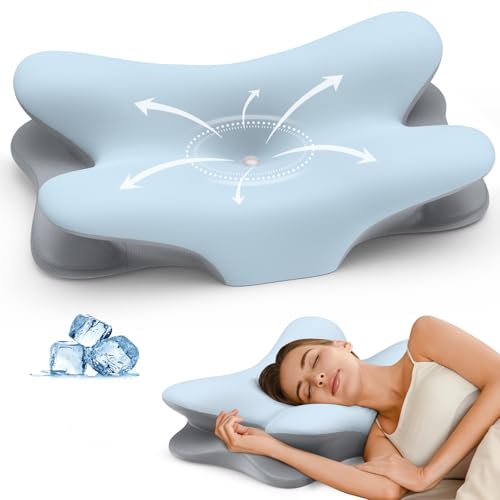
Besyodo Contour Memory Foam Pillow for Side Back Stomach Sleepers (Blue)

AM AEROMAX Memory Foam Side Sleeper Pillow with Arm Hole, 7 Inch (Blue)

AM AEROMAX Memory Foam Side Sleeper Pillow with Arm Hole, 7 Inch (White)
Taking A Closer Look At The Options
After a rotator cuff repair or shoulder replacement, the simplest things, like rolling onto your side, become a negotiation. The Cheer Collection W-shaped pillow is sized at roughly 23.5 by 14 by 6 inches, large enough to wedge between your arm and torso so the healing shoulder stays slightly propped. The shape mimics a soft barrier, which keeps the operated arm from drifting into a position that tugs the joint.
For most people a few weeks out of surgery, that controlled elevation is the difference between a tolerable night and a long, restless one. The cover wears like a basic bed pillow and spots clean without drama. You may find the 6-inch height a touch tall if your mattress is very soft, since the pillow can compress into a thicker bed surface.
Everyday Advantages
- W-edge geometry keeps the healing shoulder from rolling inward during sleep
- Generous 23.5-inch length supports the full upper arm, not just the joint
- Soft cover fabric stays comfortable against bare skin in warmer months
- Works as a daytime arm prop while you read or watch TV in recovery
Trade Offs
- Lacks a securing strap, so light sleepers may need to reposition it through the night
- Spot cleaning is the practical option; full machine washing may not hold up over time
Key Specs
Whose Bed It Belongs On
Anyone in the first 6 to 12 weeks after rotator cuff or shoulder surgery who needs passive support without strapping the arm down.
Skip It When
You sleep heavily and roll often, in which case the strapped Cheer Collection version (item 2) will hold position better through the night.
The strap-equipped sibling to item 1 solves the single biggest complaint about post-surgery pillows: they migrate. An adjustable band anchors the pillow to your arm so the support stays where the surgeon wants it, even when you shift between deep sleep cycles. For restless sleepers recovering from a procedure, that consistency is a quiet relief.
The pillow itself shares the W-shaped footprint of the original, so the geometry and arm-channeling logic carry over. Where it differs is in confidence: you may find the strap lets you stop micro-managing your position and actually rest. Some wearers find the strap a touch warm against bare skin in summer, which is a fair trade for the security it provides.
A Favorable Mix
- Adjustable strap eliminates the middle-of-night pillow chase
- Same trusted W-shape as the original, with the migration problem solved
- Helpful for both side-sleepers and back-sleepers who need their arm propped
- Light enough to reposition without straining healing muscles
Small Caveats
- Strap fabric can feel warm against the arm in hot sleepers
- Velcro or buckle hardware may need occasional checking as the strap loosens with use
Built With In Mind
Active sleepers and side rollers in the first months after shoulder surgery who keep waking up to find their support pillow on the floor.
Look Elsewhere When
You do not want anything strapped to your arm, in which case the original Cheer Collection W-pillow (item 1) offers similar shape without the band.
Weighted blankets earn most of the press, but a weighted body pillow is a different animal. The SleepCloud stretches 41 inches long and weighs 6.5 pounds, just enough to feel like a steady hug when you sling it along your front or curl it between your knees and arm. The Tencel cover is the sleeper feature here: Tencel is a fiber made from wood pulp that breathes better than cotton and feels cool to the touch, which matters when you live in a warm climate or run hot at night.
For side sleepers, the long shape gives your down-side arm something to drape over, which takes pressure off the shoulder. It also anchors the upper body so you stay put instead of rolling onto your back. The pillow is heavier than expected out of the box, so you may want to test the weight on your bed before committing to a full night.
The Upside
- Tencel cover wicks heat, a real benefit for night sweats or warm bedrooms
- 41-inch length runs the full torso, useful for side and stomach sleepers
- 6.5-pound weight provides gentle pressure without feeling restrictive
- Works as a back support pillow for upright reading or lounging
Honest Caveats
- Heavier than a standard pillow, so repositioning takes a bit more effort
- Tencel covers typically want a gentle wash cycle, which is a small ownership habit to learn
- Shape is cylindrical, not contoured, so it does not lock the head into a fixed position
Right Fit For
Hot sleepers and restless side sleepers who want weight and cooling in one body-length pillow.
Another Choice May Suit
You need targeted shoulder isolation rather than full-body weight, in which case the AM AEROMAX arm-hole pillow (item 8) addresses the shoulder directly.
Stiff morning necks usually trace back to one of two things: a pillow too thin to fill the shoulder-to-head gap, or a pillow too thick to let the spine settle. The Besyodo cervical pillow tries to split the difference with a hollow center that cradles the head while a contoured edge supports the neck’s natural curve. Memory foam is the fill, so it holds shape night after night without going flat.
For side sleepers in particular, the elevated side wings keep the head from tipping toward the mattress, which keeps the cervical spine stacked over the shoulders. The gray cover is removable for washing, a small but important detail for anyone with allergies or warm skin. You may find the first few nights feel unusual, since ergonomic pillows do require an adjustment period.
Positive Points
- Hollow center keeps the head from drifting sideways during sleep
- Contoured edges fill the neck curve that standard pillows miss
- Removable, washable cover is a genuine plus for skin-sensitive sleepers
- Memory foam holds its loft longer than fiberfill alternatives
Where It May Fall Short
- Fixed shape makes it less forgiving for stomach sleepers who like to squish a pillow flat
- Memory foam can sleep warm in rooms without airflow, since the dense fill traps body heat
Best Suited To
Side sleepers who wake with a stiff neck and want a contoured fill that locks the head into alignment.
Reach For A Different Pick When
You shift between side and stomach positions nightly, in which case the multi-position Besyodo blue pillow (item 7) is a more forgiving shape.
Besyodo’s second gray cervical pillow in this lineup offers the same contoured silhouette as item 4 but with a slightly different foam density in the build. For people who prefer a pillow that gives a touch more under the head rather than holding a firm platform, this version tends to feel a little softer on first contact while still delivering the neck support that defines the line.
The arm-channeling benefit for side sleepers is similar: the raised edges keep the head stacked, and the curve fills the gap your shoulder creates. If you have used item 4 and found it a touch too firm, this is the natural next step in the same family. It pairs well with a regular pillow tucked between the arms for added pressure relief.
Good Reasons To Consider
- Slightly softer feel under the head compared to firmer cervical models
- Contoured shape supports the natural curve of the cervical spine
- Breathable cover helps with overnight temperature regulation
- Lightweight enough to take on trips without dominating luggage
Less-Strong Areas
- Less head restraint than a hollow-center design, so very restless sleepers may slip off the contour
- Same memory foam warmth trade-off as other dense-fill options
Who Should Grab It
Side sleepers who like contoured support but find ultra-firm memory foam a bit too rigid under the head.
Not Your Match When
You want a specific arm slot rather than a neck cradle, in which case the AM AEROMAX arm-hole pillow (item 8) addresses arm pressure directly.
The third Besyodo entry in this roundup leans into pressure-point relief. The ergonomic shape has a contoured zone designed to support the neck’s curve while letting the head settle into a soft hollow, which spreads the weight of the skull across more of the pillow’s surface. That spread matters, because concentrated pressure at the base of the skull is what tends to wake people with morning headaches.
For side sleepers, the higher edge fills the space between the ear and the mattress, so the neck does not have to bend sideways to reach the pillow. The cover is removable and easy to launder, which keeps the pillow hygienic over years of nightly use. You may find this pillow works best on a firmer mattress that does not swallow the contour.
Why It Works Well
- Spreads head weight across a wider area to reduce pressure points
- Contoured edge holds the neck in a neutral alignment on the side
- Removable cover simplifies regular cleaning and allergy control
Softer Spots
- Contour depth may feel too tall for users with narrower shoulders
- Memory foam fill can take a few nights to soften to a personal feel
Feature Snapshot
Perfect Match For
Side sleepers with broad shoulders who wake with tension at the base of the skull and want a pillow that distributes head weight.
Swap It Out When
You need a body-length pillow for full-arm support rather than just head and neck contour, in which case the SleepCloud weighted option (item 3) covers more of the body.
Most ergonomic pillows commit to one position. The blue Besyodo contour is built to handle side, back, and stomach sleepers without forcing a compromise. The trick is a multi-height design, with a higher side for side sleepers and a lower side for back and stomach positions, plus a central channel that cradles the head in either orientation.
For arm sleepers specifically, the higher contour side fills the shoulder gap on your down side, and the central channel gives your arm a path to slip under without lifting the pillow. It is a versatile pick for couples with mixed sleep styles or for anyone whose preferred position shifts through the night. The memory foam holds shape well, and the blue cover is a nice change of pace from standard white bedding.
Strengths Worth Knowing
- Dual-height contour adapts to side, back, and stomach sleepers in one pillow
- Central channel gives the down-side arm space to rest without lifting the head
- Memory foam fill supports the neck without flattening over months of use
Where It Is Less Suited
- Multi-height design means it may feel too thick for strictly back sleepers used to thinner pillows
- Contour shape is less intuitive than a flat pillow, so the first few nights take adjusting
Feature Rundown
Who Will Love This
Sleepers whose position changes through the night, or couples with different sleep styles sharing a bed.
A Better Fit Elsewhere
You only sleep on your side and want a dedicated arm channel, in which case the AM AEROMAX arm-hole pillow (item 8) commits fully to that posture.
Where most ergonomic pillows address the neck, the AM AEROMAX addresses the arm directly. The defining feature is a curved cutout that lets your down-side arm slip underneath the pillow rather than getting trapped beneath it. At 20 by 10 by 7 inches, it is a compact shape that fits on a standard pillowcase and takes up about the same room as a regular pillow, with one important addition: that arm channel.
The medium-density memory foam gives enough support to keep the head level without feeling like a brick. For pure side sleepers, the design finally solves the “where does my arm go” problem, since the channel means you are not compressing nerves under your own body weight. You may find the 7-inch height ideal on a firmer mattress, while very soft beds can let the pillow settle too low.
What Earns Its Place
- Curved cutout specifically lets the down-side arm rest below the head
- 20-inch length fits a standard pillowcase, so it blends into existing bedding
- Medium-density foam balances support and comfort without feeling rigid
- Compact footprint suits smaller beds and travel use
Things To Consider
- Channel orientation favors one side at a time, so consistent left-side sleepers may need a mirror version for the right
- 7-inch loft can feel too tall on a soft mattress that compresses under body weight
Key Product Details
Made For
Pure side sleepers who wake with numb or tingly arms and want a pillow that finally gets the arm out from under the head.
Consider Something Else When
You need full-torso support and weight rather than just an arm channel, in which case the SleepCloud weighted body pillow (item 3) covers more of the body.
The white version of the AM AEROMAX side sleeper pillow is functionally identical to the blue sibling in item 8, with the same 20 by 10 by 7-inch footprint and the same curved arm channel that lets the down-side arm rest below the head. The only meaningful difference is the color, which matters more than it sounds: white bedding reads as a calm, neutral foundation in most bedrooms, while blue reads as an accent.
For side sleepers setting up a guest room, a minimalist bedroom, or a rental where bold colors are not the goal, the white version slips in without visual friction. You get the same medium-density memory foam, the same arm relief geometry, and the same compact footprint that fits a standard pillowcase. You may find this is the more thoughtful choice for a couple sharing a bed with different pillow preferences.
What Pays Off
- Neutral white color blends with most bedroom palettes and white bedding sets
- Same proven arm cutout geometry as the blue version
- Compact 20-inch length works for travel and smaller beds
Practical Considerations
- White cover shows marks more readily than darker options, so it benefits from a protective pillowcase
- Same single-side channel orientation as the blue version, so dedicated left-side sleepers may need a mirror option for the right
Who It Suits Best
Side sleepers who want the AM AEROMAX arm relief in a neutral white that does not clash with their existing bedroom design.
Where Another Pick Suits Better
You are recovering from shoulder surgery and need a barrier-style pillow, in which case the Cheer Collection W-shaped pillow (item 1) is built for that specific need.
Matching An Arm Sleeper Pillow To Your Sleep Style
Start with the problem you actually want to solve, not the marketing language on the box. Post-surgery recovery calls for a wedge or strap-equipped barrier pillow that keeps the healing arm from rolling inward. General side sleeping benefits from a contoured cervical shape or a dedicated arm-hole pillow that finally gets the down-side arm out from under the head. People who shift positions through the night do better with a multi-position contour like the Besyodo blue model.
Material matters more than most shoppers expect. Memory foam holds contour and spreads head weight, but it can trap heat. Tencel and other plant-based covers breathe better, which is a real benefit for warm sleepers. Weight is another lever. A weighted body pillow applies gentle pressure that some people find calming, while others find it too much work to reposition mid-night.
The honest read is that no single pillow solves every sleep problem. The right match depends on whether your priority is shoulder protection, neck alignment, arm pressure relief, or full-body weight. Match the pillow’s core geometry to the specific pain point, not the most appealing feature on the spec sheet.
Key Considerations Across These Picks
Common Shopping Slip Ups
The biggest mistake is choosing a pillow based on softness alone. A pillow that feels cloud-like in the store can leave the neck unsupported at home, which is the opposite of what an arm sleeper needs. Equally common: ignoring the arm entirely and focusing only on head height. The down-side arm is often the actual source of numbness, not the head.
Another trap is assuming one pillow will serve every household member. Couples with different sleep styles benefit from picking two specific designs rather than one compromise, and that is exactly why the multi-position Besyodo blue pillow exists as a backup option for shifting sleepers.
Where The Extra Money Goes
Higher-tier arm sleeper pillows typically add a removable, washable cover, a denser or more breathable foam blend, and a more refined channel geometry. The weight and material upgrades show up in longevity: a denser foam holds its shape for years, while a budget foam can flatten in months.
Spending more pays off most when you sleep hot, have sensitive skin, or need the pillow to last through years of nightly use. For short-term recovery, a basic W-shape wedge from the Cheer Collection handles the job without the premium price tag. The honest call: spend up if the pillow is your nightly driver for the next several years, and stay simple if you need it for a defined recovery window.
Frequently Asked Questions
How Do Arm Sleeper Pillows Actually Help Side Sleepers?
They relieve pressure on the down-side arm by giving it a dedicated channel or by keeping the head elevated so the arm does not get pinned. Many also support the cervical spine, which reduces morning neck stiffness.
Can I Use An Arm Sleeper Pillow If I Am Not Recovering From Surgery?
Yes. The same geometry that protects a healing shoulder also helps any side sleeper who wakes with numb arms, a stiff neck, or shoulder tension. The Cheer Collection options lean recovery-focused, while the AM AEROMAX and Besyodo models serve general side sleeping.
What Is The Difference Between A Cervical Pillow And An Arm Sleeper Pillow?
A cervical pillow focuses on supporting the neck’s curve and head alignment, while an arm sleeper pillow focuses on giving the down-side arm a place to rest. Some designs, like the Besyodo multi-position pillow, combine both ideas in a single shape.
How Long Does It Take To Adjust To A New Ergonomic Pillow?
Most sleepers need three to seven nights to settle into an ergonomic pillow, since the contoured shape feels different from a flat fill. Sticking with it through that adjustment period matters, because the first night rarely reflects long-term comfort.
Are Memory Foam Arm Sleeper Pillows Safe For Hot Sleepers?
They can be, especially when paired with a breathable cover like Tencel or a removable mesh layer. Hot sleepers benefit from a cool-room setup and a moisture-wicking pillowcase, since the foam itself does not breathe the way fiberfill does.
The Takeaway
The right arm sleeper pillow depends less on brand and more on the specific pressure you want to relieve. Side sleepers chasing arm relief will gravitate to the AM AEROMAX designs, neck-focused sleepers will like the Besyodo cervical line, and anyone in recovery should start with the Cheer Collection wedge or strapped version. Match the geometry to the pain point, give yourself a week to adjust, and the difference shows up in how you feel the next morning.