
Yes, an old pillow can make you sick, and the evidence is in what it quietly collects night after night. After roughly 18 to 24 months of regular use, the average pillow harbors measurable populations of dust mites, dead skin cells, sweat and body oils, and bacteria that can trigger allergic rhinitis, asthma flare-ups, morning sinus pressure, and stubborn facial breakouts. The pillow you press your face into for a third of every day deserves far more scrutiny than it usually receives.
Below, the full picture of what actually grows inside a used pillow, which morning symptoms point back to it, how each fill material ages, and a clear framework for cleaning versus replacing yours tonight.
The Microscopic Life Hiding Inside Every Pillow
Within weeks of unboxing a fresh pillow, it becomes a living habitat. Your body sheds roughly 0.5 to 1 gram of skin every day, and a sleeping adult releases between 200 milliliters and 1 liter of sweat per night depending on room temperature and bedding. That steady stream of organic material falls directly into the pillow’s outer layers, where humidity, warmth, and darkness create a near-ideal incubator for allergens and microbes alike.
After about 12 months of nightly use, researchers have documented that a typical used pillow contains tens of thousands of Dermatophagoides dust mites along with their fecal pellets, which are the actual allergy triggers, not the mites themselves. The Mayo Clinic has long noted that mite allergen concentrations in bedding climb sharply within the first two years and then plateau at a high baseline. By year three or four, the fill often harbors bacterial species including Staphylococcus and E. coli, plus fungal spores such as Aspergillus mold and mildew colonies, especially if the pillow has ever felt damp.
Why the pillow is uniquely hospitable
A pillow is warmer, more humid, and more oxygen-starved than almost any other spot in your bedroom. Your face and scalp press into it for hours, concentrating sweat, body oils, cosmetics, and saliva into a small zone. The result is a thick biofilm on the surface and a deep reservoir of debris in the core that simple airing cannot reach, which is why surface freshness tells you almost nothing about what is happening underneath.
Surface grime versus deep fill contamination
Visible yellowing tells you the cover needs washing, but the harder problem sits inside. Pillow fill is made of porous fibers or foam that trap particles in ways a smooth pillowcase cannot replicate. Even a freshly laundered pillowcase over a five-year-old foam core can leave you breathing through a dense filter of old allergens and microbial residue every single night.
So those accumulated particles rarely stay harmless, and over time they translate into a recognizable set of clinical conditions.
Health Conditions Linked to Sleeping on an Old Pillow
Pillows sit among the top three dust-mite reservoirs in the home, alongside mattresses and upholstered furniture, according to the American College of Allergy, Asthma & Immunology (ACAAI). The health fallout falls into a few clear categories, and identifying which one matches your symptoms is the fastest path to relief.
Respiratory and sinus complaints
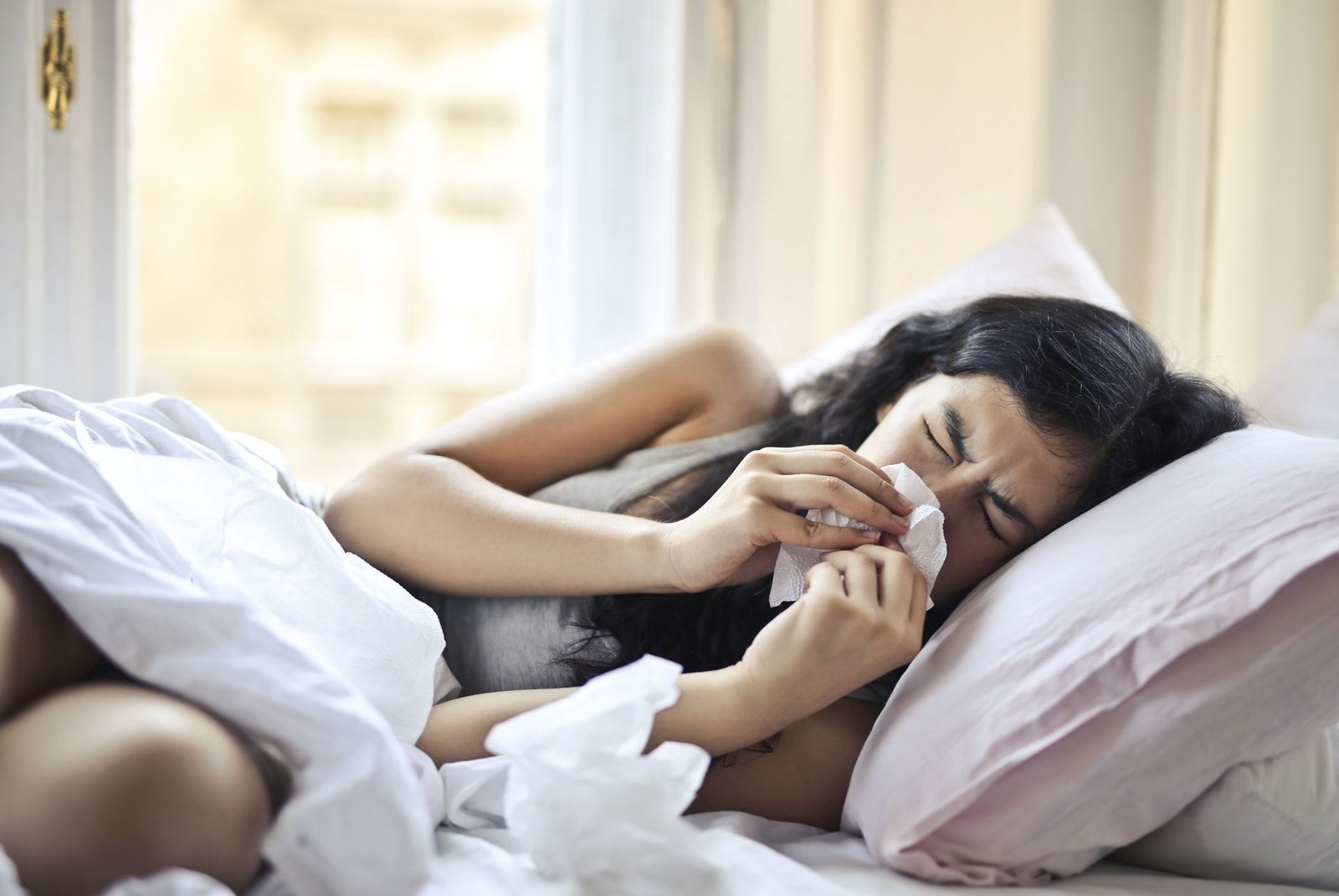
Allergic rhinitis is the classic response, with morning sneezing, a runny or blocked nose, and postnasal drip that you cannot explain by a cold. Asthma sufferers often see nighttime wheeze or cough spikes because inhaled mite debris and mold spores irritate already-inflamed airways, turning the pillow into a reliable asthma trigger. Sinus pressure and dull morning headaches are also common, since lying flat lets allergens sit against your nasal passages for hours without drainage.
Skin and eye issues
Bacteria transferred from pillow to face can clog pores along the cheeks, jawline, and hairline, producing acne or small folliculitis bumps. The Allergy & Asthma Network has also flagged pillow hygiene as a frequent trigger for atopic dermatitis flare-ups in children, since the face and neck stay in contact with allergen-laden fabric for long stretches. Red, itchy, or watery eyes upon waking are another tell, especially if they clear up an hour or two after you get out of bed.
Warning Signs Your Pillow May Be Affecting Your Health
Run through this short checklist the next time you wake up feeling worse than you did the night before. The more boxes you tick, the more likely your pillow is part of the problem rather than an innocent bystander.
- Congestion that improves on vacation: You breathe clearly in hotels or at a friend’s house, then start sneezing again within a day of returning home.
- Persistent yellow stains or odor: The cover picks up discoloration or a stale smell that survives a normal wash cycle.
- Allergy symptoms with no season: You sneeze, itch, or wheeze year-round rather than only during pollen months.
- Clustered breakouts on one side: Pimples or red bumps appear on the cheek or jaw that matches the side you sleep on.
- Lumpy, flat, or crunchy fill: The pillow no longer springs back when folded, and you can feel hard clumps through the cover.
Fold your pillow in half and place a shoe or book on top. A healthy pillow should spring back to full loft within about 10 seconds. If it stays compressed or feels lumpy, the fill has broken down and the inside is almost certainly full of trapped debris.
One more clue worth tracking: if your symptoms ease within a day or two at a hotel, then return the moment you sleep on your own pillow, you have a strong, repeatable signal that the pillow, not the season, is driving the problem.
Those symptoms tend to trace back to the pillow’s internal composition, because different fills break down and harbor contaminants in distinct ways.
How Different Pillow Materials Age and Contaminate
Not all pillows age the same way, and the fill you choose changes how fast allergens accumulate, how thoroughly you can clean them, and how long they stay sanitary before they need replacement. Material-specific contamination patterns explain why two pillows of the same age can be in completely different condition.
| Fill type | How it ages | Cleaning reality | Typical replacement window |
|---|---|---|---|
| Memory foam | Absorbs moisture and oils deep inside; cannot be machine-washed; surface often yellows by year two. | Spot-clean only; baking soda freshens the surface but does not sanitize the core. | 2 to 3 years |
| Down and feather | Clusters flatten and clump; allergens collect in the loft; tolerates thorough washing and full drying. | Machine-washable on gentle cycle with mild detergent; tumble dry with dryer balls until bone dry. | 3 to 5 years |
| Polyester (down-alternative) | Fibers break down fastest, shedding micro-fibers that hold onto dust and oil; lumps form within 12 to 18 months. | Machine-washable; air-dry flat or low heat to prevent clumping. | 1 to 2 years |
| Natural latex | Resists dust mites and mold and mildew naturally; degrades at the surface with body oils over time. | Spot-clean and air out; never machine-wash, as agitation breaks the foam. | 3 to 4 years |
The cleaning method has to match the fill. Throwing a memory foam pillow into a washing machine damages the foam and pushes contamination deeper rather than removing it, which is the opposite of what you want. A down pillow, by contrast, can come out of a hot wash and full dryer cycle genuinely cleaner than many foam alternatives ever get.
Cleaning Versus Replacing: A Decision Framework
Sometimes a proper wash genuinely resets a pillow, and sometimes it gives you false confidence while the core stays contaminated with allergens, bacteria, and mold spores. Use this framework to decide which situation you are in tonight.
When a wash is enough
A pillow under two years old, with no foul odor, no visible mold, and an intact fill that still springs back, can usually be saved. Wash the cover and, if the care label allows, the pillow itself in hot water (at least 130°F) with a mild detergent. Run it through an extra rinse cycle to flush out soap residue, then dry it completely on medium heat. Any dampness left inside is an open invitation for Aspergillus mold to recolonize within days.
When replacement is the honest answer
If the pillow is past its material lifespan, smells stale even after washing, has lost its loft, or has been used during an illness, retirement is the safer call. The Sleep Foundation notes that most pillows lose meaningful support and hygiene integrity well before they look obviously worn, which is why age-based replacement is more reliable than visual judgment alone. Practically, yes, and the expiry date is set by the fill, not the calendar on your nightstand.
Extending any pillow’s healthy life
A zippered, allergen-impervious encasement is the single most effective upgrade you can make. It wraps the entire pillow in a fabric that mites cannot penetrate, and it effectively doubles the functional pillow lifespan by keeping body oils and skin out of the fill. Pair that with a washable pillowcase changed weekly, and the encasement becomes a backup defense rather than the only one.
Special Considerations for Allergy Sufferers, Children, and Immunocompromised Sleepers
If you or someone in your home has asthma, eczema, hay fever, or a weakened immune system, the standard replacement timeline should be shortened by roughly a third. A pillow you would keep for three years at full health should be replaced at two if asthma is in the picture, because every additional month is another month of nightly allergen exposure to dust mites and old pillow allergies symptoms waiting to return.
For infants and toddlers, the priorities shift toward breathable, fully washable fills and absolutely no down or feather, which can trap more allergen and pose a higher suffocation risk if the case fails. A simple polyester or latex core that you can run through a hot wash every week or two is the safer pick. Keep a second pillow in rotation so the freshly washed one always has time to dry fully before going back on the bed.
Quick-reference tips for a healthier sleep setup
- Use allergen-proof encasements: Wrap every pillow in a zippered cover rated for dust-mite protection, then add a normal pillowcase over it.
- Wash covers weekly at 130°F: Hot water kills dust mites and washes away the allergens they leave behind.
- Replace on a schedule, not a feeling: Two years for polyester, three for memory foam, three to four for latex, and three to five for down.
- Keep a rotating spare: Two pillows per bed lets you always have a clean, fully dried one ready.
- Retire the pillow after illness: After a cold, flu, or skin infection, throw it out rather than risk reinfection from residual bacteria.
Final Thoughts
Your pillow works hard every night, and it pays for that work by slowly filling with the exact debris your body sheds while you sleep. Treat it like a replaceable filter, pair it with a washable encasement, and replace it on a schedule that matches the fill. Those three steps alone remove the bulk of the respiratory and skin risk tied to old bedding, and they cost far less than another round of allergy medication.
FAQ
Can old pillows actually make you sick?
Yes. A pillow older than 18 to 24 months typically harbors dust mites, mite fecal allergens, sweat and body oils, and bacteria such as Staphylococcus, all of which can trigger allergic rhinitis, asthma flare-ups, sinus pressure, and stubborn facial breakouts. Replacing or thoroughly sanitizing the pillow usually resolves symptoms that started without another obvious cause.
What harmful things live inside an old pillow?
Used pillows commonly contain tens of thousands of Dermatophagoides dust mites, their fecal pellets, dead skin cells, body oils, bacterial species including Staphylococcus and E. coli, and fungal spores such as Aspergillus mold and mildew. Concentrations climb sharply in the first two years and then plateau at a high baseline.
What are the health symptoms caused by old pillows?
The most reported symptoms are year-round sneezing, congestion, itchy or watery eyes, morning sinus headaches, nighttime wheezing, and acne or folliculitis clustered on the cheek or jaw where the face rests. Symptoms that fade within a day or two of sleeping elsewhere are a strong clue that the pillow is the trigger.
How often should you replace your pillow?
Most pillows should be replaced every 1 to 3 years depending on fill: about 1 to 2 years for polyester, 2 to 3 years for memory foam, 3 to 4 years for latex, and 3 to 5 years for down with proper care. Allergy sufferers, asthmatics, and immunocompromised sleepers should shorten those windows by several months.
Can washing a pillow make it safe again?
Washing can reset a pillow that is under two years old, structurally intact, and free of mold or odor, provided you use water at 130°F or hotter and dry it completely. Once the fill is broken down, smells stale, or harbors mold inside the core, washing gives false confidence and replacement is the honest answer.
Do memory foam and down pillows get dirty differently?
Yes. Memory foam absorbs sweat and oils deep into the core and cannot be machine-washed, so contamination builds faster than you can clean it. Down tolerates a full hot wash and high-heat dry, so it can be genuinely sanitized, though the clusters flatten and clump over time and still demand eventual replacement.