

A sulcata enclosure sees a lot of abuse from a 70-pound bulldozer with a shell, and substrate choice quietly decides whether your tortoise stays clean, dry, and free of shell rot. The right bedding supports burrowing behavior, holds humidity where it helps and sheds it where it doesn’t, and cuts down on how often you’re spot-cleaning a stinky mess. The wrong one can lead to impaction, mold, or a tortoise that refuses to settle. This lineup covers the main substrate families (aspen shavings, coconut coir, cypress mulch, sphagnum moss) plus two staple diet items that round out a sulcata’s daily care, so you can match the floor of the enclosure to how you actually keep your pet.
The Main Contenders

Galápagos Aspen Digs Shavings Bedding, 8-Quart

Galápagos Tropicoco Husk Bedding 8QT Compressed Brick

Mazuri Tortoise Diet 25 lb. Bag

Multipet Tortoise Hay 24oz

Legigo 4 Pack Coconut Fiber Substrate

Mazuri Juvenile Tortoise Food 8 oz Bag

Fluker’s Premium Tropical Cypress Bedding 10 lb

Legigo 10LB Coconut Husk 72QT Substrate
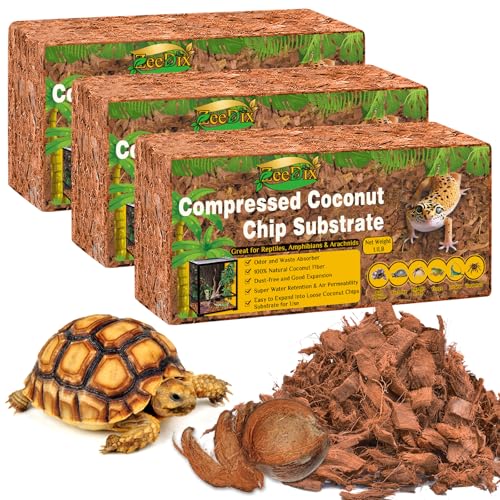
ZeeDix Coconut Husk Chip 3 Pack

ZeeDix 8 oz Premium Sphagnum Moss
The Picks, Examined More Closely
Aspen shavings have been a tortoise-keeper standby for years because they let a sulcata push, shove, and rearrange its floor without much effort. This 8-quart bag from Galápagos lands in that sweet spot between soft enough to burrow in and coarse enough not to turn to paste when it gets wet. In a dry indoor table or a night-house setup, it tends to hold shape well around hides and water bowls, which matters once your tortoise decides that the dish is a mountain to climb.
Compared to the coconut options later in this list, aspen trades humidity control for cleanliness and a more neutral smell in a small room. You may find it frustrating in humid basements, where it can sour faster, but in a climate-controlled indoor enclosure it usually goes a month between full changes with regular spot-cleaning. For keepers who want a low-fuss substrate and a tortoise that loves to dig, this is a sensible first pick.
A Few Highlights
- Soft shavings that support natural burrowing and nesting behavior
- Light, neutral scent that doesn’t overpower a small indoor room
- Easy to sift through during daily spot-cleaning, saving you time on real chores
- Reasonable value for a starter bag while you dial in your enclosure depth
Points To Note
- Not ideal for humid setups, where it can hold moisture against the shell
- Owners commonly report fine dust at the bottom of the bag on first pour
- Goes fast in deep substrate builds, so plan on reordering for full floor coverage
Right Fit For
First-time sulcata keepers running a dry indoor table who want a forgiving substrate that’s easy to clean and replace. You value simplicity over humidity tweaking.
Skip It When
The Galápagos Tropicoco Husk Bedding is a smarter match for keepers running a tropical or humidity-managed enclosure that needs to hold moisture without going soggy.
For keepers leaning tropical, this compressed coconut husk brick from Galápagos does the heavy lifting that loose aspen can’t. You add water, the brick fluffs into a deep, dark substrate, and it holds humidity longer than wood shavings without going sour. Sulcatas are a dry-arid species, so this works best as a localized humidity layer in a humid hide or a closed chamber section, rather than the entire floor.
The compressed format is the real win for storage: one small brick expands to roughly eight quarts of substrate once hydrated. That means a few bricks cover a sizeable indoor table without eating up a closet’s worth of shelf space. The honest read is that this is a humidity tool first, and a floor covering second, so most sulcata keepers will pair it with a drier top layer.
Useful Touches
- Absorbs and releases moisture steadily for stable tropical humidity
- Compressed brick saves serious shelf space before you break it open
- Sustainable coconut source appeals to eco-minded tortoise households
- Free from salts, oils, and chemical residues that could irritate a sulcata’s skin
Trade Offs
- Not the right call as a full dry-arid floor; pair it with a drier top layer
- Requires planning ahead, since you add water and wait for it to expand
- Can stain light-colored shell scutes if your tortoise wallows in it heavily
Best Suited To
Keepers running a humid hide or a mixed microclimate setup who need a reliable moisture reservoir next to a dry basking zone.
Consider Something Else When
Galápagos Aspen Digs Shavings Bedding makes more sense for a fully dry indoor table where humidity control is a non-issue and you want easier daily cleaning.
Bedding is only half the picture. Mazuri’s Tortoise Diet has been a long-running staple for adult omnivorous and tropical species, and sulcatas tolerate it well as a supplemental pellet alongside grasses and weeds. The large particle size encourages a tortoise to bite down rather than swallow whole, which is closer to how it would process roughage in the wild. The 25-pound bag also means you’re not running out every few weeks once your sulcata hits the juvenile-to-adult transition.
Where this food really earns its keep is in the ingredient list, with vitamin A and E added for eye and skin support, plus antioxidants aimed at immune health. There’s no artificial color in the mix, which is a quiet plus for keepers reading every label. Think of it as the reliable base of a varied diet: pellets three or four times a week, fresh greens the rest, and hay available at all times.
What Helps Most
- Large particle shape slows fast eaters down and supports natural chewing behavior
- Long shelf life in a 25-pound bag suits keepers with multiple adult tortoises
- Added vitamin A, vitamin E, and antioxidants support eye and immune health
- No artificial colors or flavors in the formula, which simplifies label reading
Honest Caveats
- Moderate protein and energy level, so sulcatas need plenty of grass and hay alongside it
- 25 pounds is a lot of food for a single-tortoise household; check freshness before committing
Key Product Details
Who It Suits Best
Multi-tortoise households and committed hobbyists who want a stable, long-term pellet base for adult sulcatas and other tropical or omnivorous species.
Look Elsewhere When
The Mazuri Juvenile Tortoise Food is the better fit for keepers raising a hatchling or a small sulcata under a year old, since the smaller extruded particles are easier on a young mouth.
Hay doesn’t sit in the substrate, but it absolutely belongs in a sulcata’s daily care lineup, and Multipet’s 24-ounce bag is sized for single-tortoise households. Second-cut hay is the right texture here: leafier than first-cut, with more protein and vitamins baked in, and soft enough that a young sulcata can graze without fighting tough stems. Owners commonly mix it into the enclosure as a grazing layer on top of substrate, so the tortoise is constantly working on fiber intake.
The hand-packaging is a thoughtful touch in a category that often ships you a fistful of sticks. Less sorting through debris before you offer it means less waste in the trash and more hay actually reaching the tortoise. Pair it with a Mazuri pellet rotation and fresh greens, and the diet side of your setup is largely handled.
Practical Advantages
- Second-cut texture balances fiber and protein for steady daily feeding
- Hand-packaged to reduce sticks and debris showing up in the bowl
- Easy to scatter over substrate as enrichment, encouraging natural grazing behavior
- Compact 24-ounce size fits a single sulcata without weeks of staleness
Points To Keep In Mind
- 24 ounces goes quickly with a full-grown sulcata, so factor in reorder timing
- Keep it dry in storage; humidity can sour it before the bag is empty
Made For
Single-sulcata households that want a manageable hay supply with minimal sorting and a texture young and adult tortoises both accept.
A Better Fit Elsewhere
Mazuri Tortoise Diet 25 lb. Bag suits multi-tortoise homes that prefer a pellet-forward feeding routine with hay as a side note rather than the main fiber source.
Legigo’s 4-pack is built for the keeper who is either running more than one enclosure or just wants to keep spare bricks on the shelf instead of running to the door every time a substrate change comes due. Each brick measures roughly 7.87 x 3.94 x 1.97 inches and weighs around 1.4 pounds, so the package is easy to store in a closet without taking over a corner of the room. Coconut coir (the fibrous material from coconut husks) is the standard for tropical reptile bedding, and it works the same way here as in the Galápagos Tropicoco brick earlier in this list.
The 4-pack makes sense for households juggling a sulcata table, a humid hide, and maybe a backup tub for quarantine or soaking. Where it falls a bit short is in single-tortoise homes that only need a couple of bricks per year, since the value shines when you actually rotate through all four. Most keepers will still end up topping up, but the per-brick cost lands below buying singles.
The Helpful Details
- Four-pack format lowers the per-brick cost against buying singles
- Compressed bricks stay flat and tidy in a closet until you need them
- Natural coconut coir suits humidity-managed hides and tropical sections
- Compatible with quarantine or backup tubs alongside the main enclosure
Small Caveats
- Each brick needs water and prep time; not a grab-and-go option for spot fixes
- Less efficient as a full dry-arid sulcata floor on its own
Whose Shelf It Belongs On
Multi-enclosure keepers who want a stocked supply of coir bricks for humid hides, backup tubs, and the main tortoise table without reordering every few weeks.
Where Another Pick Suits Better
Fluker’s Premium Tropical Cypress Bedding is a stronger match for keepers building a larger outdoor-style floor where mulch texture and drainage matter more than coir’s moisture hold.
Adult tortoise pellets are too large for a hatchling sulcata, and forcing a baby to bite off chunks it can’t manage is a quick path to food refusal. Mazuri’s juvenile formula solves that with smaller extruded particles, designed so a sulcata under a year old can actually chew and swallow without choking risk. The 8-ounce bag is a small, sensible size for one growing tortoise, since juvenile diets change as the animal matures.
What makes this stand out is the live probiotic cultures tucked into the formula. Gut health in baby tortoises is fragile, and a pellet that supports gastric function alongside fiber intake takes some of the worry off your shoulders. Pair it with the same fresh greens and hay you’d offer an adult, and you’ve got a balanced start.
Strengths Worth Knowing
- Smaller particle size matches a hatchling sulcata’s bite and chewing ability
- High fiber, low starch formula mirrors natural grazing diets
- Live probiotic cultures support a young tortoise’s developing gut
- Listed as suitable for sulcata alongside many other common pet tortoise species
Where It May Fall Short
- 8-ounce bag is small, so larger breeders may need multiple bags per clutch
- You’ll outgrow the formula within a year and shift to the adult Mazuri Tortoise Diet
Feature Snapshot
Who Will Love This
Keepers raising a sulcata hatchling or juvenile who want a pellet sized correctly for the first year and formulated to support a still-developing digestive system.
Not Your Match When
Mazuri Tortoise Diet 25 lb. Bag is the more practical choice once your sulcata is past the juvenile stage, with larger particles and a longer-lasting supply.
Cypress mulch gets a bad rap from some corners of the reptile world, but the twice-milled process Fluker’s uses here strips out the sharp splinters and the volatile oils that bother sensitive species. The result is a softer, more uniform mulch that drains well and breaks down slowly under a heavy tortoise. For a sulcata in a larger indoor table or a covered outdoor pen, that drainage matters: you don’t want water pooling against a plastron (the underside of the shell).
The 10-pound bag is sized for a meaningful floor change without an oversized commitment, and it works in both high and low humidity setups if you adjust your misting schedule. In a drier room, you’ll mist less; in a humid basements, less often. The catch is that sulcatas in fully arid setups may not need cypress at all, so this is the pick for keepers who run a slightly more tropical microclimate or an outdoor-style night house.
Benefits That Matter
- Twice-milled process reduces splinters and dust for safer tortoise contact
- Drains well, helping prevent water pooling against the plastron
- Flexible across humidity levels with adjusted misting in tropical rooms
- Slow breakdown rate means fewer full substrate changes per year
Trade-Offs To Consider
- Heavier to ship and store than compressed coir bricks
- Not a great fit for fully dry-arid setups where aspen performs cleanly
The Right Fit
Keepers running a humid room, a covered outdoor pen, or a tropical microclimate who need a substrate that drains and holds structure under a heavy tortoise.
Another Choice May Suit
Legigo 4 Pack Coconut Fiber Substrate fits a more humidity-targeted use case, especially when you need a smaller brick format and want to control how much you hydrate at a time.
Where the 4-pack Legigo handles small jobs, this 10-pound coconut husk brick handles the main event. The brick arrives roughly 11.81 x 11.81 x 5.31 inches and expands to about 72 quarts of substrate once hydrated, which is enough to fill a serious indoor tortoise table in a single batch. The whole point of going this size is convenience: one hydration session, one spread, one full enclosure reset.
The trade-off is that a brick this size demands planning, both for the workspace to hydrate it in and the storage to keep it dry before use. A bathtub or a large plastic storage tub is the typical staging area. The honest read is that this is the right pick for keepers who know they’re doing a full substrate change soon and want to do it in one pass rather than juggling smaller bricks.
What Stands Out
- Expands to about 72 quarts, covering a large indoor enclosure in one go
- Single-bulk format simplifies a full substrate change day
- Coconut husk composition retains humidity while resisting rapid breakdown
Practical Considerations
- Requires a sizeable tub or sink to hydrate without overflow
- Heavier to ship and handle than the 4-pack version earlier in this list
At A Glance
Who Should Grab It
Keepers planning a full substrate change for a large indoor table who want one hydration session and one reset, not a multi-brick juggling act.
Swap It Out When
Legigo 4 Pack Coconut Fiber Substrate is the better fit for keepers rotating smaller batches through humid hides or backup tubs rather than doing single big resets.
Most of the substrates in this list aim for a fine, soil-like texture. ZeeDix’s coconut husk chips go the other direction: chunky pieces in the 10 to 35 millimeter range that add visible structure to an enclosure. For a sulcata, that texture matters in humid hides, where chips hold air pockets that keep the surface from compacting into a wet mat. The 3-pack format keeps the order modest, and each brick expands into loose chips you can pour where you want them.
This is more of a top-dressing and hide-filling product than a full sulcata floor, since a full enclosure of chips is rough on a tortoise’s plastron over time. Use it where it shines: inside a humid hide, around a water bowl splash zone, or as a drainage layer beneath a finer substrate. Owners commonly report that the natural look is a quiet bonus, especially in planted or naturalistic setups.
What Makes Sense
- Chunky 10-35mm chips add texture for naturalistic humid hides
- Holds air pockets that prevent compaction under moisture
- Three-pack format offers moderate volume for targeted use
- Natural coconut material without added dyes or chemical treatments
Some Limits To Know
- Too rough to use as a full sulcata floor across a wide indoor table
- Can be knocked around by a heavy tortoise, scattering chips outside the hide
Perfect Match For
Keepers building naturalistic humid hides and want a chunky, structured substrate to line them, rather than a fine layer across the full enclosure.
Where A Sibling Pick Shines
Galápagos Tropicoco Husk Bedding is the better fit for full-floor humidity setups, with a finer texture that spreads more evenly across a wide tortoise table.
Sphagnum moss is the moisture-locking workhorse of the reptile world, and ZeeDix’s 8-ounce bag of pressed, naturally green moss (long-fiber sphagnum harvested and dried for terrarium use) lands in the right size for single-tortoise households. You rehydrate a handful at a time, fluff it into a soft bed, and tuck it into a humid hide or a moist retreat box. Sulcatas use these spots during shedding and during the cooler months, when they need a more humid pocket without raising the room’s overall humidity.
The 8-ounce bag, expanded, comes out to roughly 12 quarts, which sounds modest but goes a long way when you only need a fistful per hide. Owners commonly appreciate that the moss is free of dyes and breaks down naturally in outdoor garden beds when it’s past its reptile-life. Think of this as a targeted tool, not a floor covering.
The Upside
- Pressed 8 oz expands to about 12 quarts when rehydrated
- Naturally green color without added dyes or chemical brighteners
- Compostable at end of life, which simplifies cleanup for garden-keeping households
- Perfect texture for lining humid hides and retreat boxes
Less Ideal Details
- Needs regular rehydration to stay useful; not a set-and-forget layer
- Not a full substrate; works best alongside the coir or aspen options above
Built With In Mind
Keepers building a humid hide or a moisture-controlled retreat spot for shedding and cool-weather use, who want a soft moss layer they can refresh weekly.
Reach For A Different Pick When
ZeeDix Coconut Husk Chip 3 Pack is the better fit for a more structured, chunky humid hide where you want air pockets rather than a soft moss bed.
Choosing The Right Substrate And Daily Care Mix
Substrate is a balance between what a sulcata naturally walks on and what keeps the enclosure clean in your actual home. Start with humidity needs. Sulcatas come from dry African grasslands, so the main floor should be dry and well-draining, while small humidity pockets (a humid hide with sphagnum moss or a coir-filled retreat box) handle shedding and seasonal dips.
Substrate depth matters as much as substrate type. A sulcata that can fully burrow needs at least four to six inches of material that holds its shape when pushed aside, which rules out loose, dusty options and favors aspen shavings or chunky mulch over fine powders. If you go with aspen, you trade humidity for cleanliness; if you go with coconut coir, you trade dryness for moisture control.
Pair substrate with diet for a complete care routine. A varied diet of grasses, hay, fresh greens, and a measured pellet rotation (Mazuri Tortoise Diet for adults, Mazuri Juvenile Tortoise Food for hatchlings, Multipet hay as the fiber backbone) covers the nutrition side while the substrate handles foot and shell health. For keepers running a humid hide, the ZeeDix sphagnum moss and ZeeDix coconut husk chips add moisture management without overhauling the main floor.
Consider enclosure scale and cleanout frequency. A 10-pound bulk coconut brick suits a large indoor table, while a 4-pack of smaller bricks handles humid hides and backup tubs. A 10-pound bag of cypress mulch works for bigger outdoor pens, but the weight and dust mean it’s overkill for a small indoor table. Match bag size to your floor footprint, not to the lowest sticker.
Key Considerations Across These Picks
Pitfalls Shoppers Hit
A common mistake is buying a single substrate type and expecting it to do every job. A pure aspen floor in a humid basement will sour. A pure coconut coir floor in a dry living room will stay too wet. The smarter play is layering: a dry main floor, a humid hide lined with sphagnum or coir, and a drainage zone near the water bowl. Another trap is going by visual volume alone. Coconut bricks expand dramatically once hydrated, and a small brick can fill a much larger space than it looks like it will, so plan your hydration container size before you crack the seal.
Where The Extra Money Goes
The gap between a basic shavings bag and a bulk compressed coir brick is mostly about longevity and prep work. Compressed bricks cost more up front but store flat, expand to many times their size, and break down slowly under a heavy tortoise. Premium pellets like Mazuri’s tortoise formulas add live probiotics and targeted vitamins that generic foods leave out, and that shows up in a juvenile’s growth and an adult’s long-term condition. The upgrade payoff is most visible in multi-tortoise households and in keepers who don’t want to swap substrate every few weeks.